The energy drink category is undergoing significant reformulation pressure. As consumer preferences shift toward cleaner labels and functional ingredients, beverage R&D teams face a critical challenge: how to deliver sustained energy performance using plant-based botanicals while maintaining flavor integrity and shelf appeal.
Lotus approached this challenge by engineering Plant Power 7™ (PP7™), a proprietary blend of certified organic plant-based ingredients designed to deliver functional energy without traditional synthetic stimulants. The formula combines green coffee beans, guayusa, green tea extract, coffee fruit, elderberry, Jerusalem artichoke, and ashwagandha KSM-66.
This botanical combination addresses multiple formulation objectives. Green coffee beans and guayusa provide caffeine through plant sources. Green tea extract and coffee fruit contribute polyphenols and antioxidant compounds. Elderberry and Jerusalem artichoke bring functional food components. Ashwagandha KSM-66 introduces adaptogenic properties, addressing consumer demand for stress-management functionality alongside energy delivery.
Formulation Strategy: From Ingredient Selection to Consumer Experience
Lotus recognized that ingredient selection alone does not guarantee market success. The brand understood that formulation efficacy must align with consumer expectations and usage occasions.
Developers face a persistent challenge in the energy category: consumers read labels more closely than ever before. They seek ingredients they can identify and feel confident consuming. Yet ingredient transparency alone does not drive purchase decisions or repeat trial.
The PP7™ formula was engineered with a dual objective: deliver functional efficacy through botanicals while creating a sensory experience consumers actively want to consume. This requires careful balance in ingredient proportioning, extraction methods, and flavor delivery systems to ensure that plant-powered ingredients do not compromise taste or mouthfeel.
Consumers have come to expect what Lotus refers to as the Lotus Glow™—a tangible energy experience that delivers sustained alertness and mental clarity throughout the day. This distinction matters to product developers: the formulation must provide genuine functional benefit, not simply the perception of wellness.
Positioning Plant-Powered Innovation in a Crowded Category
For decades, energy drink formulation centered on maximizing caffeine content and synthetic performance compounds. The category trained consumers to evaluate products based on milligrams of caffeine, taurine, guarana, and B-vitamin megadosing.
Lotus identified a significant white space: developing an energy formula built entirely around certified organic botanicals without compromising efficacy or taste. This formulation philosophy represents a meaningful departure from category conventions.
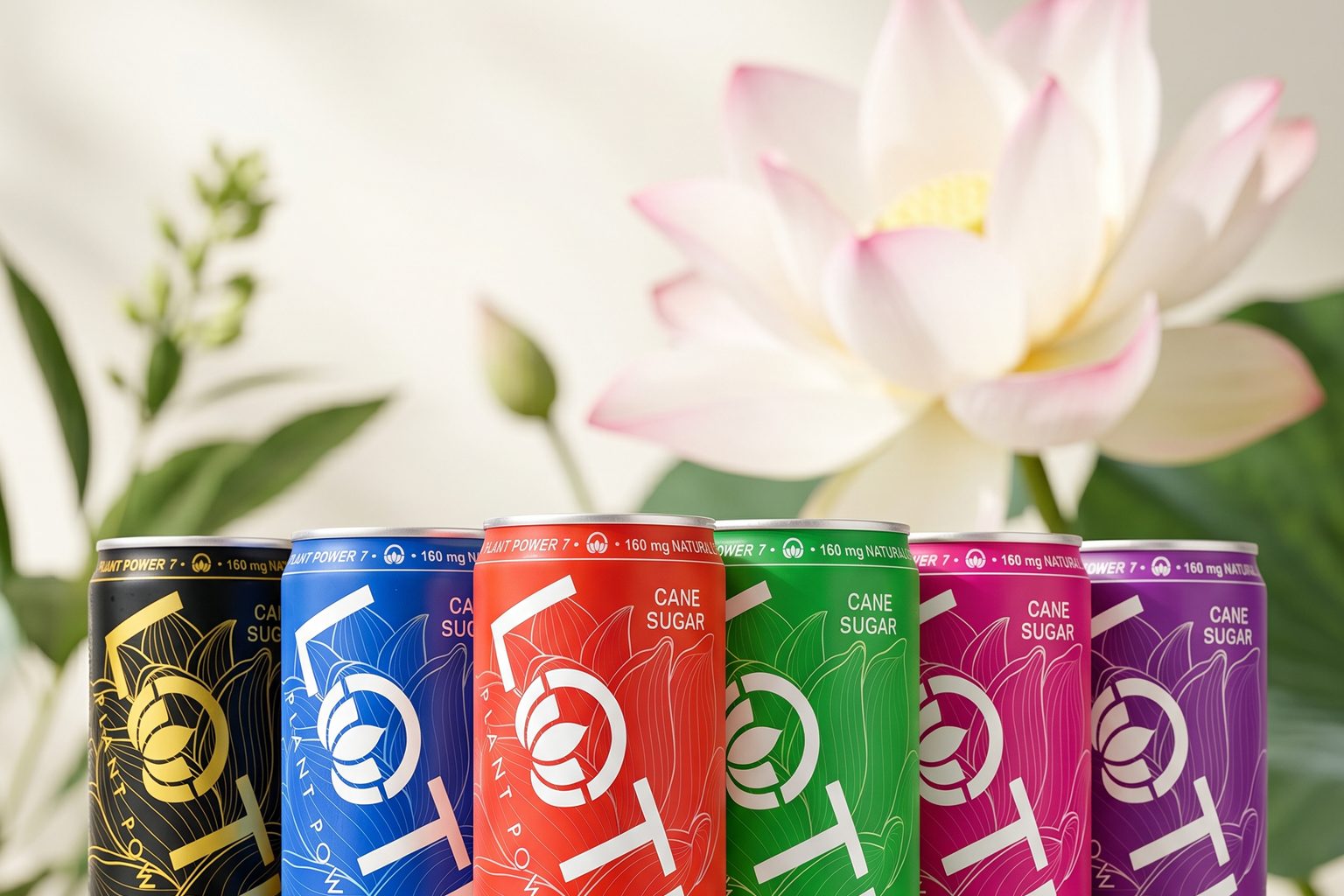
The brand's packaging system—built around a color-driven architecture rather than traditional flavor-based design—serves a secondary function for product developers: it creates visual consistency across the portfolio while allowing individual SKUs to maintain distinct identity. Pink Lotus, Blue Lotus, Green Lotus, Red Lotus, Purple Lotus, and Gold Lotus each contain the PP7™ base formula, enabling manufacturers to scale production efficiencies across variants while maintaining perceived product differentiation.
Manufacturing Implications and Scalability
The decision to anchor the portfolio around a single proprietary botanical blend carries significant manufacturing advantages. Rather than developing unique formulations for each flavor variant, manufacturers can produce a standardized PP7™ base, then apply flavor and color systems downstream. This approach reduces SKU complexity in R&D, simplifies supply chain management for botanical ingredients, and improves production efficiency.
The certified organic requirement across all seven botanical components raises specific sourcing and quality-control considerations. R&D teams must establish consistent supplier relationships for green coffee beans, guayusa, green tea extract, coffee fruit, elderberry, Jerusalem artichoke, and ashwagandha KSM-66, with documented organic certification chains throughout production.
Using ashwagandha KSM-66 specifically—rather than generic ashwagandha extract—indicates intentional standardization around a proven, clinically-studied form. This specificity matters both for efficacy consistency across production batches and for regulatory compliance across multiple markets.
The Functional Future of Energy Formulation
The energy category is evolving beyond stimulant-based formulations toward more sophisticated ingredient matrices that address multiple consumer expectations: energy delivery, ingredient transparency, lifestyle alignment, and sensory satisfaction.
By combining plant-powered ingredients with consistent packaging architecture and intentional brand positioning, Lotus has created a formulation framework that developers and ingredient suppliers can learn from. The brand demonstrates that next-generation energy drinks require alignment across three dimensions: functional efficacy through the botanical blend, manufacturing scalability through standardized base formulas, and consumer appeal through distinctive yet consistent brand presentation.
For R&D teams developing energy beverages, the Lotus approach illustrates a viable path forward: engineer functional botanicals that deliver genuine performance, design manufacturing systems that leverage ingredient consistency across variants, and build brand systems that communicate both product differentiation and formulation intentionality to increasingly sophisticated consumers.