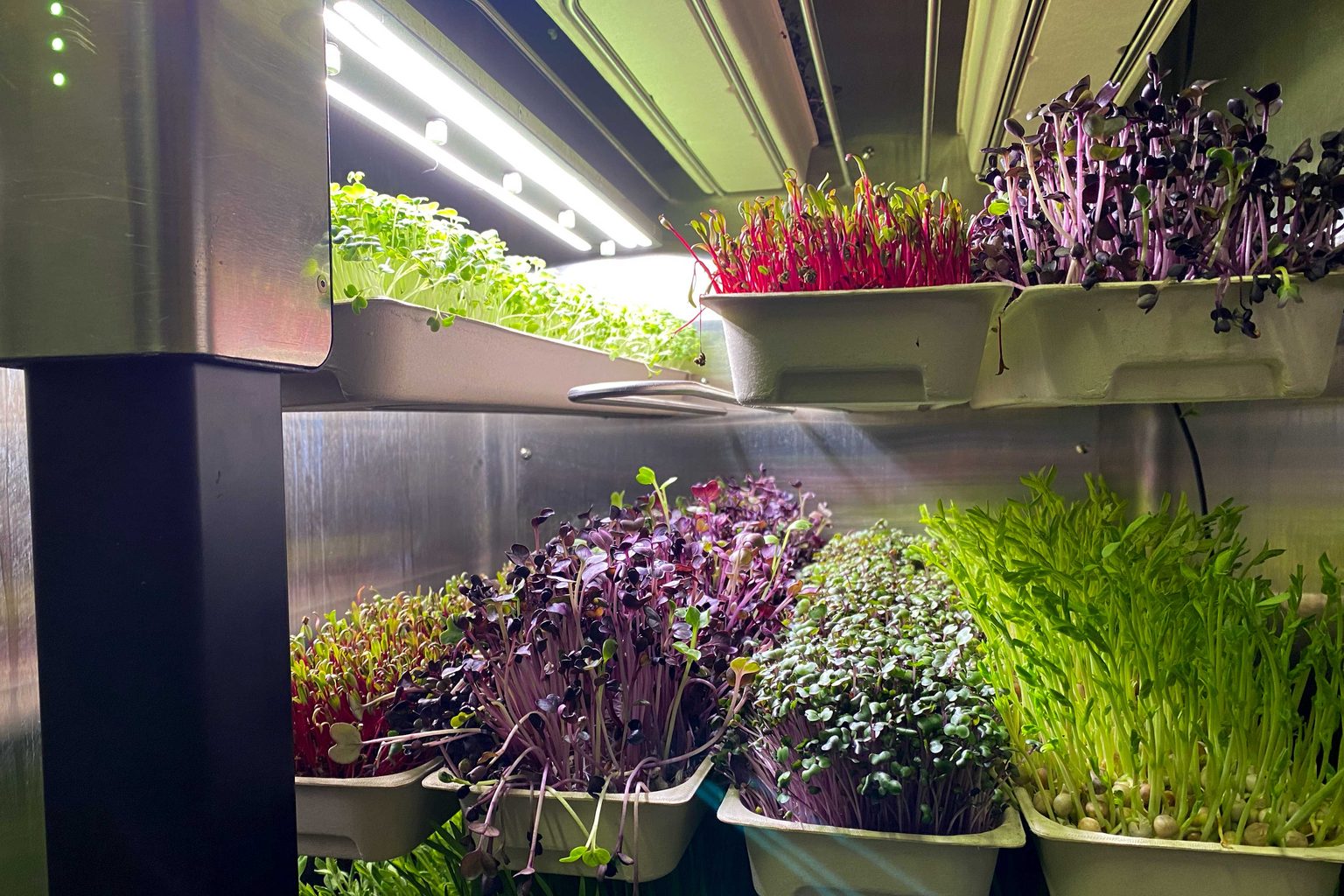
Instafarm, a Colorado-based food technology company, has developed an automated growing system specifically engineered to produce nutrient-dense microgreens and herbs in controlled commercial environments. The platform combines soil-based cultivation with intelligent automation, offering foodservice operators a on-site ingredient production solution that addresses supply chain challenges while delivering fresh, consistent product at peak quality.
Core System Architecture & Growing Medium Selection
Instafarm's decision to utilize soil-based growing distinguishes its approach within the controlled-environment agriculture sector. While hydroponic systems have become increasingly common in indoor agriculture, the company has positioned soil as a natural growing medium capable of producing consistent results while remaining accessible to operators with minimal agricultural expertise. The system combines soil-based growing with automation, allowing commercial users to cultivate fresh greens on-site with minimal labor and oversight.
The platform integrates multiple automated components: intelligent lighting systems, automated watering mechanisms, environmental monitoring, and pre-seeded grow trays. This integrated approach simplifies a process that has traditionally required both specialized expertise and significant time investment, shifting the complexity burden from the operator to the technology layer.
Ingredient Production & Quality Control
Microgreens offer concentrated nutrient profiles and functional food applications that extend well beyond traditional fine-dining garnish use. These ingredients are increasingly relevant to wellness programs, sports performance facilities, and health-focused foodservice concepts. On-site production enables operators to harvest at peak freshness—moments before service—while maintaining complete control over growing conditions and ingredient consistency.
Commercial applications across restaurants, hospitality properties, corporate campuses, healthcare environments, and wellness facilities can now produce select ingredients in-house rather than relying on external suppliers for delicate herbs and microgreens. This production model reduces transportation miles, minimizes waste associated with sourcing and distribution, and ensures ingredient availability at maximum nutritional value and shelf life.
Automation & Process Monitoring
Instafarm's ecosystem extends beyond the physical growing units to include a companion mobile application that enables remote monitoring of growing cycles, lighting schedule adjustments, settings management, and real-time operational updates. The technology focuses on removing friction from a cultivation process that historically required significant attention and expertise, with automation working largely behind the scenes to standardize production outcomes.
Market Recognition & Scaling Implications
Instafarm's Commercial Unit was recognized as a CES 2026 Innovation Awards Honoree in the Food Tech category and earned a 2026 Kitchen Innovations Award, recognizing the practical innovation and operational value of the platform. This validation reflects broader industry interest in ingredient sourcing solutions that address rising costs, labor constraints, transportation expenses, and supply chain disruptions while improving freshness and sustainability metrics.
The controlled-environment agriculture market remains highly competitive, with long-term success dependent on continued demonstration of value, scaling production capabilities, and maintaining accessibility for commercial operators. Instafarm's focus on solving immediate operational challenges—rather than presenting speculative future applications—positions the platform as a practical manufacturing solution for on-site ingredient production within the foodservice sector.