The Format Shift
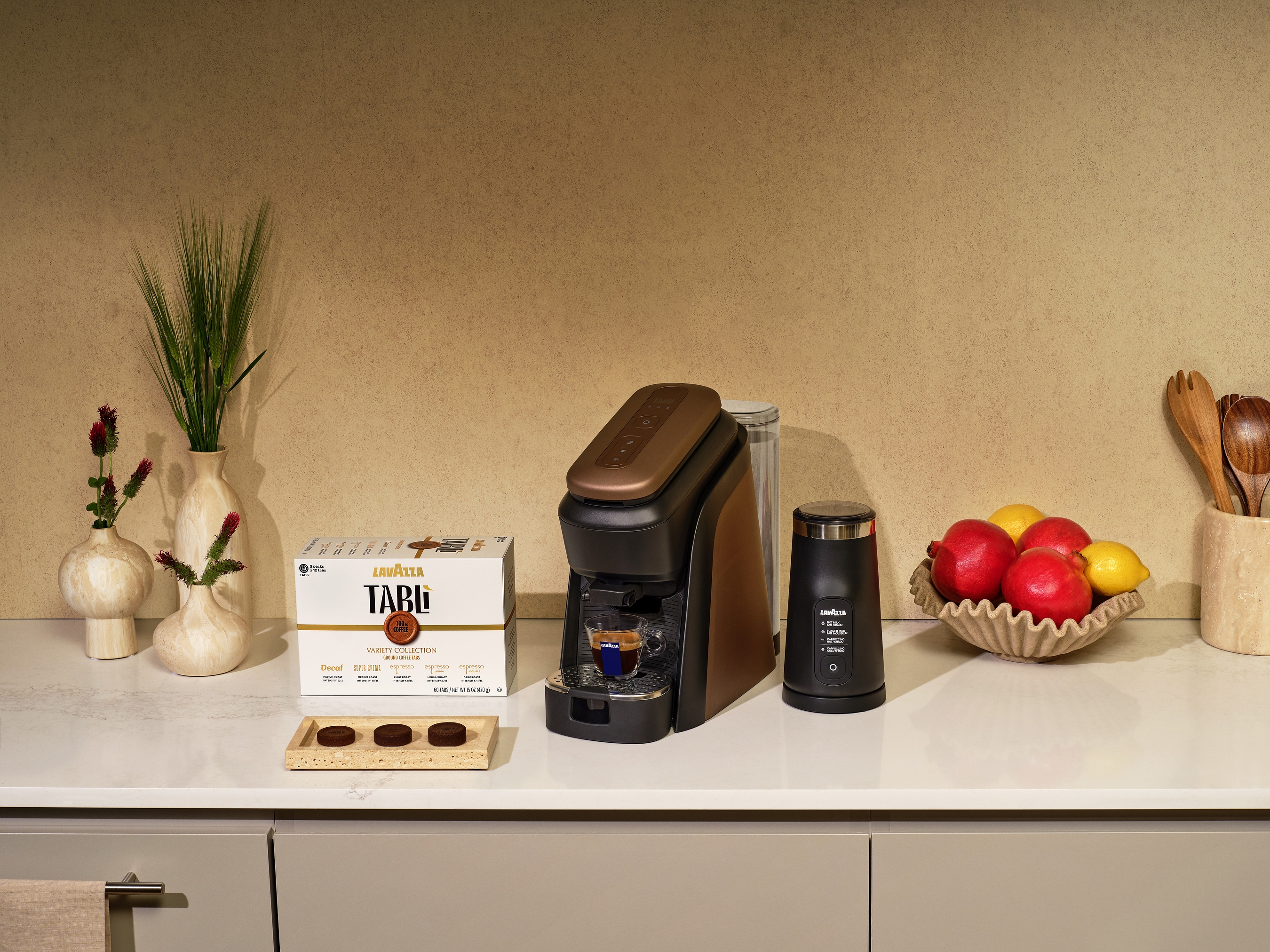
Lavazza has commercially launched Tablì in the United States, positioning the product as the first single-serve coffee system built entirely around a compressed, 100% coffee tab — no capsule casing, no binders, no carrier materials. The system went live on LavazzaUSA.com on August 3, 2026, following a presale window in June and July that sold out across five separate drop moments, with at least one clearing inventory in under an hour.
The ingredient story is the headline for trade buyers and co-manufacturers watching this space: each Tablì tab is produced from precisely ground and tamped coffee, then compression-molded into a solid, shelf-stable format. No food additives, no encapsulation aids, no flow agents — a formulation profile that maps directly onto the clean-label positioning that has reshaped every adjacent beverage segment over the past decade. The tab's concave geometry is engineered to allow coffee grounds to expand during hot-water extraction, producing espresso with what Lavazza describes as a dense crema layer it calls Crema Plus.
Five Years, 15 Patents
The technical barrier to this format is significant. Lavazza's R&D team spent five years developing the compression and extraction parameters, ultimately filing more than 15 patents covering the tab's physical structure, the extraction dynamics, and the dedicated brewing hardware. That IP moat matters for ingredient and equipment suppliers evaluating whether compressed-coffee tabs represent a durable category or a promotional format: the patent portfolio suggests Lavazza is treating this as a platform, not a line extension.
Five blends are available at launch — Super Crema, Espresso, Decaf, Espresso Lungo, and Espresso Double — priced between $48.00 and $52.80 per 48-tab pack, or $12.49 per 12-tab box. The range signals Lavazza's intent to replicate the SKU architecture of the pod market within the tab format. Amazon availability is scheduled for later in August, which will materially expand the addressable distribution footprint. The dedicated Tablì machine retails at $129.99 in three finishes; bundle configurations run up to $249.99.
Market and Supply Context
For the broader ingredient and foodservice supply chain, the Tablì launch is worth watching on two levels. First, compressed-format coffee tabs require a distinct specification profile relative to conventional ground coffee or capsule fills — particle size, moisture content, and bulk density must all be controlled tightly enough to sustain structural integrity through packaging, logistics, and consumer handling, while still releasing cleanly during extraction. Suppliers of specialty green coffee, precision grinding services, and contract manufacturing partners with tablet or compressed-format capability are the most directly implicated.
Second, the clean-label angle has clear crossover relevance to the broader single-serve beverage category. As plant-based and functional beverage formats continue to proliferate, the "nothing but the ingredient" positioning — no additives, transparent sourcing, verifiable COA — is increasingly a commercial requirement rather than a differentiator. Lavazza is applying that logic to premium coffee in a way that may accelerate similar thinking among competing roasters and private-label operators.
The Group operates nine manufacturing plants across five countries and reports annual turnover exceeding €3.9 billion, providing the production scale to support a sustained US rollout. Whether Tablì's tab compression process is handled in-house or through toll manufacturing partners has not been disclosed, but the 15-patent filing suggests proprietary process control is central to the supply chain strategy. Foodservice and specialty coffee operators evaluating single-serve solutions will find the format's no-waste, no-casing profile potentially advantageous for back-of-house efficiency and sustainability reporting.
Written by Michael Politz, Author of Guide to Restaurant Success: The Proven Process for Starting Any Restaurant Business From Scratch to Success (ISBN: 978-1-119-66896-1), Founder of Food & Beverage Magazine, the leading online magazine and resource in the industry. Designer of the Bluetooth logo and recognized in Entrepreneur Magazine's "Top 40 Under 40" for founding American Wholesale Floral, Politz is also the Co-founder of the Proof Awards and the CPG Awards and a partner in numerous consumer brands across the food and beverage sector.