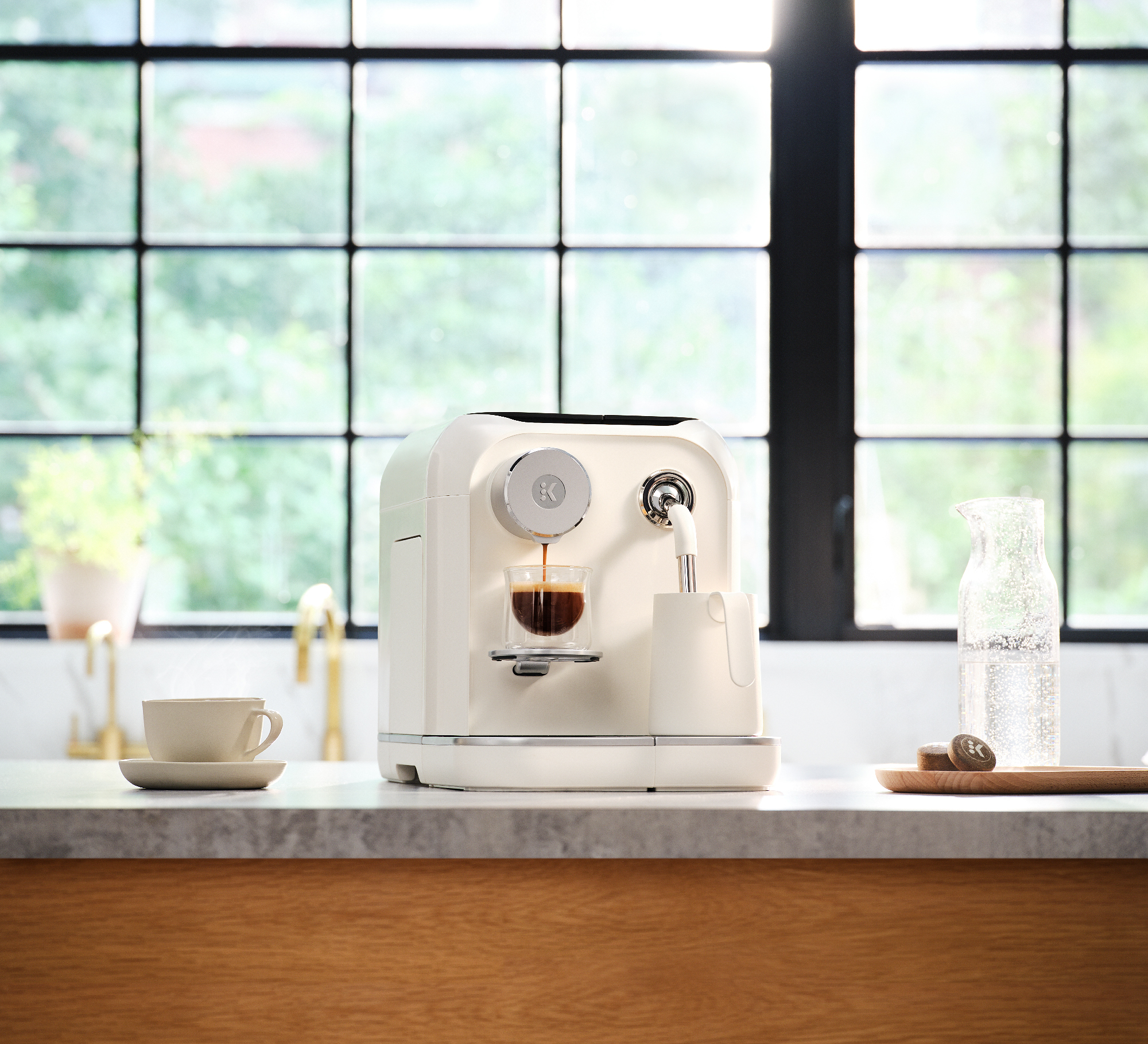
Keurig Dr Pepper's new Keurig Alta System replaces the conventional plastic-and-aluminum K-Cup with AltaRounds — a pressed coffee disc wrapped in a proprietary plant-based coating — marking a formulation-level redesign of single-serve coffee that carries direct implications for ingredient suppliers, biopolymer developers, and co-manufacturers across the coffee packaging value chain.
The launch arrives as the at-home espresso segment intensifies pressure on legacy pod formats. More than 47 million U.S. and Canadian households operate a Keurig brewer, giving the new AltaRounds format immediate scale potential and a sizable installed base to convert.
The Ingredient Architecture
At the core of the AltaRounds innovation is a plant-based coating that incorporates alginate — a biopolymer derived from seaweed — as a primary functional ingredient. The coating is NSF-certified and serves a dual technical role: it must withstand up to 10 bars of extraction pressure required for authentic espresso while remaining structurally intact through handling, shipping, and the automated recipe-reading process built into the Alta brewer. After brewing, the spent grounds and coating eject as a single intact piece, certified by the Biodegradable Products Institute (BPI) for both home and commercial composting.
Neha Mallik, Senior Director of Product Development at Keurig Dr Pepper, emphasized the coating's load-bearing function: "It withstands the pressure authentic espresso requires while delivering the simplicity consumers expect from Keurig." For ingredient and biopolymer suppliers, that specification — pressure resistance at espresso extraction levels plus compostability certification — sets a defined performance bar for alginate and alginate-blend applications in food-contact encapsulation.
The AltaRounds production process draws on a technique analogous to barista tamping: roasted beans are ground, pressed into a disc form, and then encapsulated. Each disc carries a machine-readable recipe code that the Alta brewer uses to auto-adjust pressure, temperature, and water-to-coffee ratio — a closed-loop system that demands tight particle size and moisture content consistency from each production run to ensure repeatable extraction.
Supply and Certification Context
The initial SKU lineup — six varieties of Keurig Alta Coffee and Espresso, priced at $9.99–$10.99 per eight-count pack — launches exclusively through KeurigAlta.com at $499.99 for the brewer. A pre-order window sold out in under 24 hours, signaling consumer pull that will translate into near-term volume demand for AltaRounds raw material inputs. Peet's Coffee is confirmed as the next brand to adopt the format, with additional licensees expected, suggesting the AltaRounds supply chain will need to scale to support a multi-brand pod ecosystem.
From a regulatory and clean-label standpoint, the alginate-based coating's NSF certification and BPI composability designation position AltaRounds favorably against tightening extended producer responsibility (EPR) frameworks in California and the EU. Suppliers of food-contact biopolymers — particularly those working in alginate, carrageenan, or pectin-based film systems — should note that Keurig Dr Pepper has effectively stress-tested a high-pressure, food-contact encapsulation use case at commercial scale. For the broader functional ingredients and encapsulation sector, the AltaRounds architecture represents a validated application pathway for seaweed-derived hydrocolloids beyond traditional coating and texture applications.
The system retains backward compatibility with standard K-Cup pods, which limits the immediate cannibalization risk for existing K-Cup ingredient supply partners while the Alta platform builds volume. That dual-format strategy gives Keurig Dr Pepper time to refine AltaRounds specification sheets and COA requirements across its growing brand roster — and gives suppliers a defined window to qualify materials against those standards. Buyers evaluating the coffee and tea ingredients supply chain should track AltaRounds volume ramp as a leading indicator of alginate demand growth in the North American food-contact encapsulation market.
Written by Michael Politz, Author of Guide to Restaurant Success: The Proven Process for Starting Any Restaurant Business From Scratch to Success (ISBN: 978-1-119-66896-1), Founder of Food & Beverage Magazine, the leading online magazine and resource in the industry. Designer of the Bluetooth logo and recognized in Entrepreneur Magazine's "Top 40 Under 40" for founding American Wholesale Floral, Politz is also the Co-founder of the Proof Awards and the CPG Awards and a partner in numerous consumer brands across the food and beverage sector.