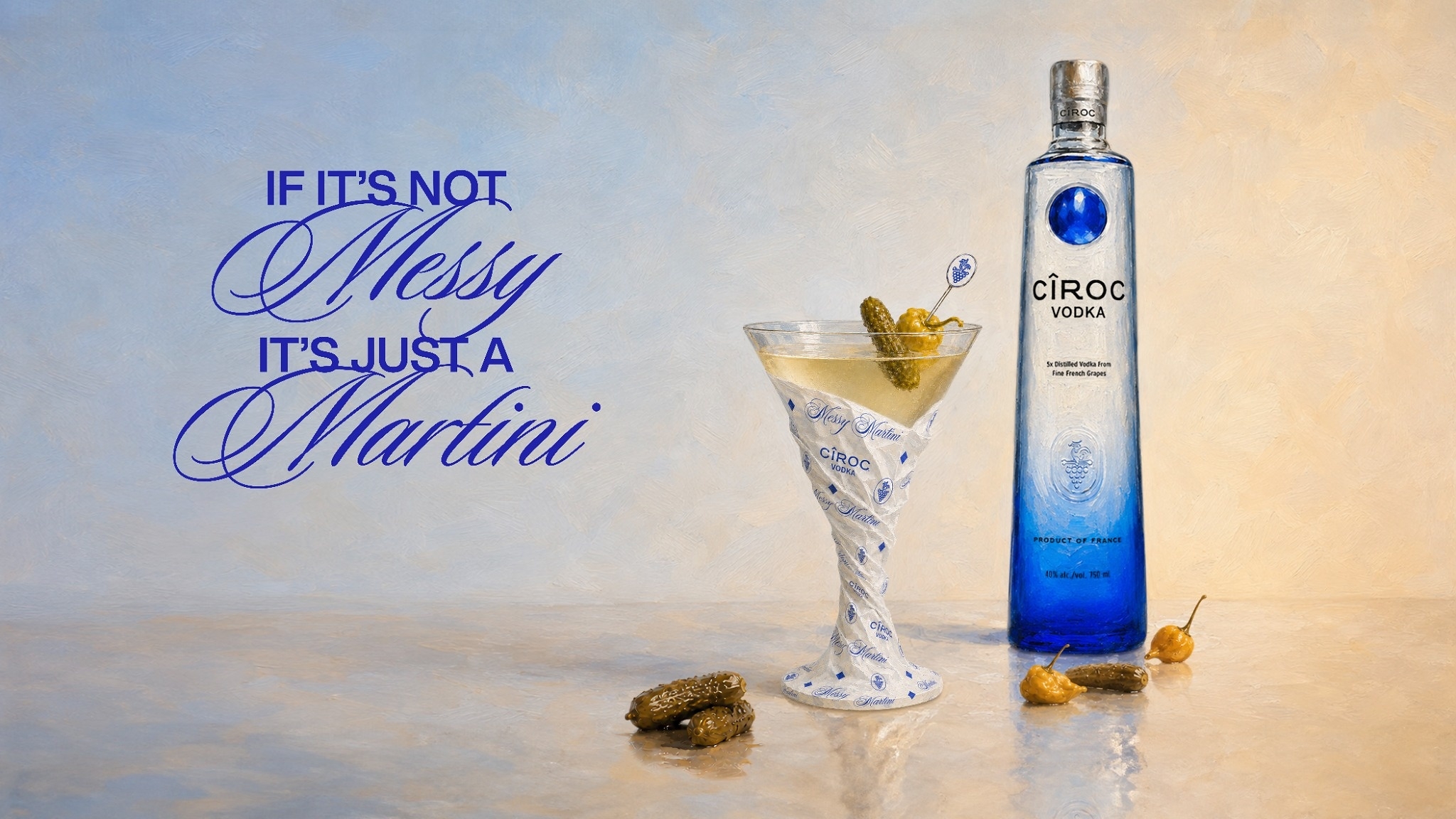
Savory brine is moving from cocktail-bar novelty to a formulated product strategy. Cîroc Ultra-Premium Vodka is formalizing that trend with the Messy Martini, a trademarked dirty-martini variant that combines the brand's five-times-distilled French grape vodka with pickle brine and banana pepper brine. The launch is paired with an interactive self-serve apparatus — the Martini Machini — and a multi-partner commercial rollout that spans foodservice, retail, and delivery channels.
The Flavor Architecture
The Messy Martini's formulation centers on layered brine rather than a single acidic note. Pickle brine contributes lactic-acid salinity and fermented vegetal character, while banana pepper brine adds a mild capsaicin-adjacent heat and subtle sweetness — a profile designed to complement, rather than compete with, Cîroc's clean citrus finish derived from Mauzac Blanc and Ugni Blanc grapes. For the November 6 pop-up in New York City's Lower East Side — running 4–10 p.m. at 48 Ludlow Street — the brand introduced a bespoke brine developed in collaboration with Dave's Hot Chicken, incorporating the chain's signature spice-heat profile into the cocktail garnish system. That kind of co-developed flavoring arrangement is increasingly relevant to flavor house and ingredient suppliers tracking cross-category heat-and-acid pairings.
The Retail and Delivery Play
Beyond the activation, the more commercially durable element is Cîroc's partnership with Filthy Foods, a Miami-based premium cocktail garnish and mixer brand founded in 2009 and distributed through Total Wine, Publix, Meijer, and Albertsons. Beginning November 1, consumers purchasing a 750ml bottle of Cîroc through Uber Eats in select cities may receive Filthy's signature cocktail mix as a bundled delivery item. A nationwide retail component adds co-branded Filthy "neckers" — bottle-neck hangtags — to Cîroc SKUs at point of sale, effectively merchandising a garnish solution directly alongside the spirit. For ingredient and cocktail-mix suppliers watching how premium spirits brands extend their flavor story into adjacent SKUs, the necker program is a low-friction mechanism for cross-category trial.
Cîroc's positioning as a grape-based vodka — crafted in the South of France and distilled five times — underpins the brand's case that a cleaner base spirit amplifies rather than masks brine-forward flavor additions. Nick Tran, President & CMO of Cîroc, framed the launch as a permission structure for consumer experimentation: the Martini Machini allows guests to dial in their preferred ratio of brine, garnish, and presentation, generating real-world preference data on savory flavor intensity that could inform future SKU development.
The savory cocktail segment reflects a broader ingredient trend: sodium-forward, fermented, and pickled flavor profiles that migrated from the food side — pickle-brined fried chicken, fermented hot sauces, olive-oil-forward dressings — are now codified in RTD-adjacent serve formats. For F&B ingredient developers supplying brine concentrates, acidulants, or natural flavor extracts to beverage manufacturers, Cîroc's trademarked Messy Martini serves as a commercial proof-of-concept that savory brine can anchor a scalable, branded serve rather than remaining a bartender improvisation.
Written by Michael Politz, Author of Guide to Restaurant Success: The Proven Process for Starting Any Restaurant Business From Scratch to Success (ISBN: 978-1-119-66896-1), Founder of Food & Beverage Magazine, the leading online magazine and resource in the industry. Designer of the Bluetooth logo and recognized in Entrepreneur Magazine's "Top 40 Under 40" for founding American Wholesale Floral, Politz is also the Co-founder of the Proof Awards and the CPG Awards and a partner in numerous consumer brands across the food and beverage sector.