Velas Resorts has strategically positioned itself as a test kitchen for advanced culinary development in the luxury hospitality sector. The Michelin recognition earned by Cocina de Autor in Los Cabos reflects what R&D professionals should note: a deliberate, ingredient-centric approach to menu formulation that combines technical precision with ingredient science. This distinction matters to product developers and ingredient suppliers seeking insight into how premium dining operations are currently sourcing, formulating, and executing refined cuisine at scale.
A recent special engagement at Grand Velas Riviera Nayarit—where the Michelin-starred culinary team from Cocina de Autor Los Cabos executed an exclusive tasting at Piaf—offers a tangible case study in contemporary ingredient formulation and application. The event demonstrated how structured menu development, ingredient selection, and preparation technique converge to create dishes capable of earning and sustaining Michelin-level recognition.
Ingredient Science and Contemporary Formulation
The menu's opening courses established clear principles relevant to ingredient suppliers and product developers. Escamoles—a historically significant Mexican ingredient—were formulated alongside avocado, habanero, cilantro, and corn masa in a composition that balanced cultural authenticity with modern textural and flavor development. The accompanying cocktail, built from tequila reposado, St-Germain, Damiana, citrus, and tonic, demonstrates how multiple ingredient categories can be engineered to support a unified sensory profile.
Subsequent courses emphasized restraint in ingredient deployment. Royal Osetra caviar was paired with blue abalone, cauliflower, kaffir lime, and crème fraîche—a composition highlighting how texture differentiation and acidic balance drive dish success rather than ingredient novelty alone. For product developers, this signals a market expectation: premium ingredients must be integrated within clearly defined formulations where each component serves a specific textural or flavor function.
Sourcing Strategy: Traditional Ingredients, Contemporary Application
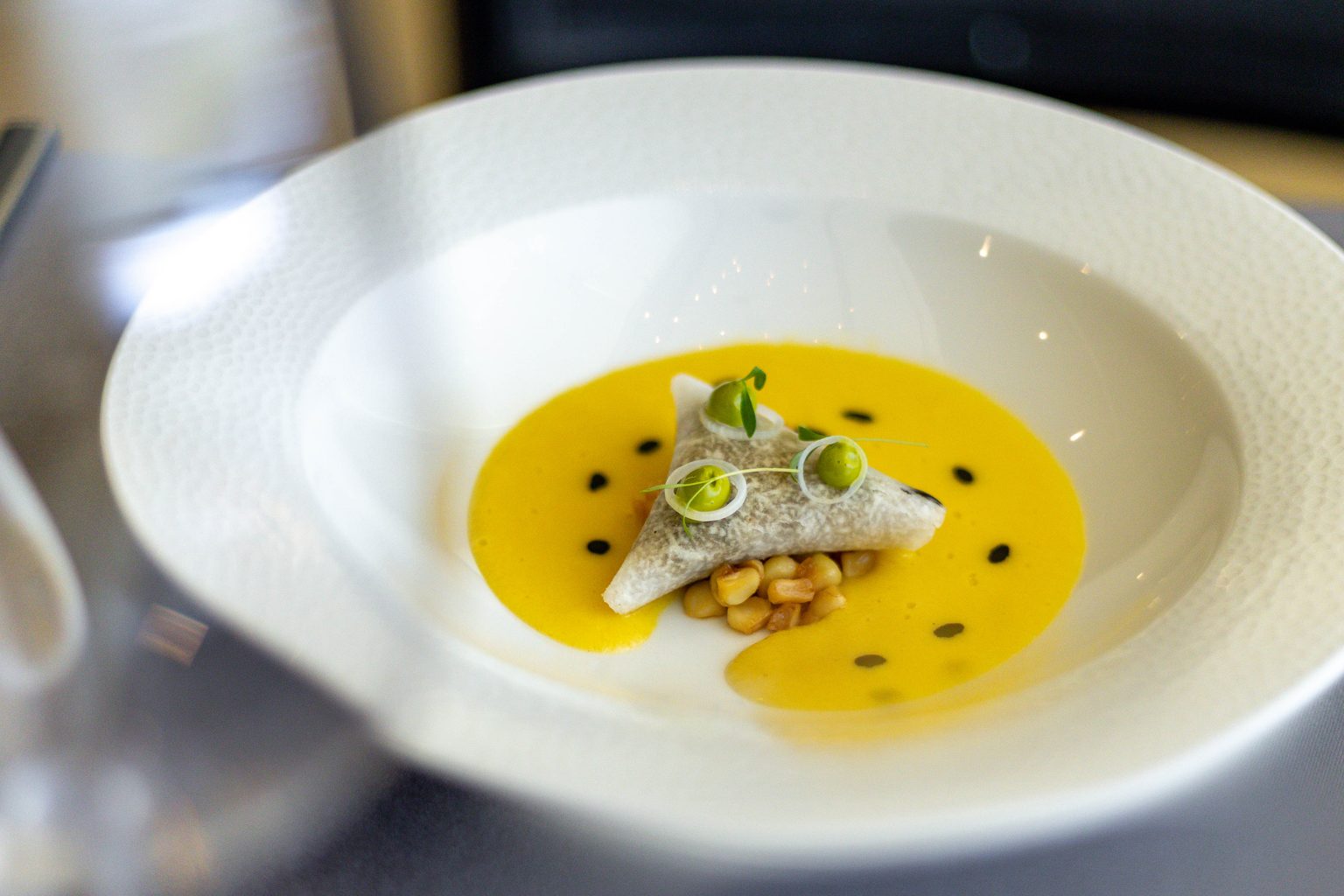
The menu's strongest technical execution emerged when chefs applied modern formulation principles to traditionally sourced Mexican ingredients. Bluefin tuna formulated with hoja santa, manzano chile, cured radish, and nixtamal demonstrated ingredient versatility when engineered through contemporary preparation methods. A yellow corn velouté—incorporating shiitake mushroom, pecan, and jicama—transformed a foundational ingredient through texture engineering and complementary flavor pairing.
These dishes signal to ingredient suppliers that sourcing premium traditional commodities (corn, chile varieties, nixtamal) remains essential to fine-dining menu development. However, suppliers should recognize that these ingredients are being paired with modern complementary elements (kaffir lime, shiitake, structured acid components) to achieve contemporary flavor and textural profiles. This is not retro-cuisine, but rather the application of contemporary food science principles to historically significant ingredient categories.
As the tasting progressed through wagyu tartar, curated Casa Madero wine pairings, and precisely executed triple-seared Angus tenderloin, the operational implication became evident: Velas Resorts has committed to a formulation and ingredient-sourcing strategy that positions culinary development as a core R&D function rather than a secondary hospitality service. This distinction reshapes how ingredient suppliers and product developers approach the luxury resort segment. Culinary innovation in this sector is now driven by the same rigor applied to product formulation and sourcing consistency across high-end independent restaurants and Michelin-tracked establishments.
The Michelin recognition achieved by Cocina de Autor reflects a broader operational shift: exceptional gastronomy in the resort sector requires the same level of ingredient science, menu formulation, and supply-chain precision that defines fine dining at the highest competitive levels. For ingredient suppliers and R&D teams, this represents a significant market signal about sourcing expectations, formulation standards, and the role of culinary development within luxury hospitality operations.