Puerta del Abra, established in 2013 in Balcarce—a coastal cool-climate zone 30 to 50 kilometers from the South Atlantic in Buenos Aires province—represents a deliberate terroir-driven approach to wine formulation in Argentina. Rather than pursuing traditional high-altitude Andean viticulture, the estate's production model centers on understanding and leveraging soil science, climate variability, and precise varietal selection to produce distinctive cool-climate wines at 40,000 to 50,000 bottles annually.
Soil Characterization and Site-Specific Formulation
The foundation of Puerta del Abra's approach is rigorous soil analysis. The estate engaged renowned French soil specialists Lydia and Claude Bourguignon—whose credentials include Burgundy domaines—to map and characterize the vineyard site. Their studies identified a mosaic of clay and limestone seams with traces of granite and marine mineral deposits, all at just over 100 meters above sea level. This composition directly informs varietal selection and management strategy. The soil profile, combined with abundant rainfall, cool Winkler II temperatures, and constant Atlantic breezes, creates the chemical and thermal conditions for slower ripening, lower alcohol accumulation, and preservation of acidity—the defining characteristics of the estate's formulation philosophy.
Critically, the estate operates within a highly specific micro-location. The positioning within the Tandilia mountain system creates unique wind dynamics, and the soil composition is not necessarily representative of the broader Balcarce geographical indication. This micro-terroir understanding shapes every production decision.
Varietal Selection and Ripening Management
Rather than relying on Malbec—the dominant Argentine red—Puerta del Abra planted varieties selected for performance in cool maritime conditions: Chardonnay, Riesling, and Albariño for whites; Pinot Noir, Cabernet Franc, Bonarda, Tannat, and Merlot for reds. This portfolio is engineered to express terroir through moderate alcohol, retained acidity, and mineral complexity. The cool nights and Atlantic breezes slow ripening naturally, reducing the need for aggressive harvest timing or post-harvest intervention.
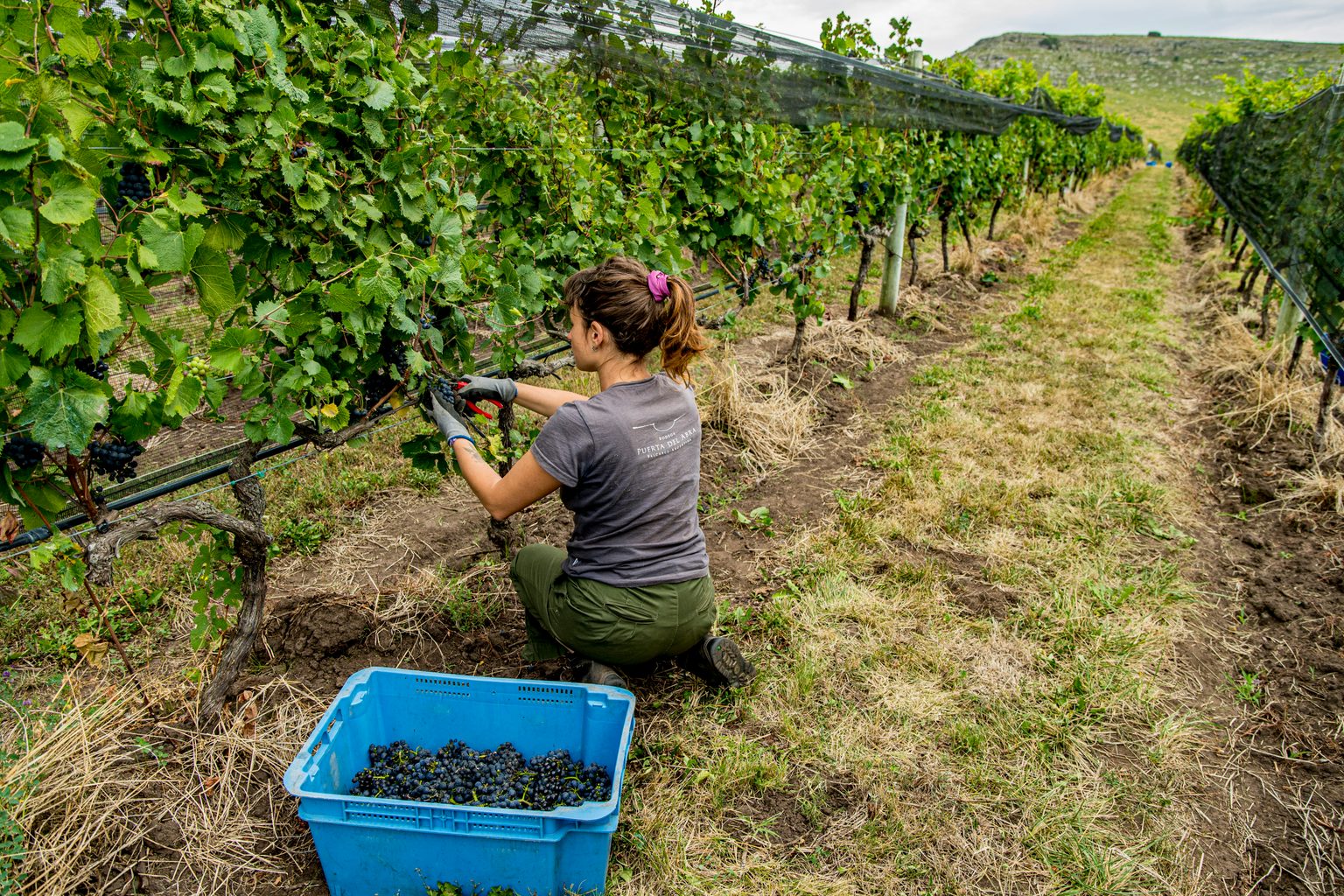
Seasonal variability is treated as a formulation variable rather than a liability. Each vintage produces different ripening curves and chemistry based on weather conditions. The team responds with targeted cultivation practices: mesh protection on exposed rows to manage wind stress, and carefully managed drip irrigation to control drought and frost risk. The production model emphasizes minimal intervention—irrigation functions as a scalpel, not a hammer—allowing climate to drive the wines' tension and freshness profile.
Winemaking Techniques and Varietal Expression
The core Puerta del Abra line expresses single-varietal production from the estate vineyard El Vallecito. The Albariño combines ripe fruit with mineral definition derived from chalky soils. The Riesling develops aromatic complexity through slow ripening while maintaining acidity spine. The Pinot Noir demonstrates still-wine potential with elegant structure and aging capacity. The Chardonnay employs Velo de Flor—a technique associated with Jerez production—and has emerged as a signature expression. On the red side, Cabernet Franc is produced as a 100 percent single varietal with pronounced pyrazine notes; Bonarda shows red fruit and gentle spice over chalk-driven minerality; Tannat delivers darker fruit with firm, polished tannins and savory notes.
The Itzae line represents experimental micro-vinification protocol. Throughout each vintage, small-scale fermentations of available fruit identify the most compelling expressions, which are then assembled into red and white blends. This technique allows annual assessment of varietal behavior and vintage character, producing wines that vary in profile edition to edition based on harvest and fermentation data.
Production Standards and Formulation Practices
Production standards include vegan certification (formalized in 2023), which formalized the estate's avoidance of animal-derived fining agents. Additional practices include lighter bottle specifications to reduce packaging environmental impact and implementation of Good Agricultural and Manufacturing Practices across cultivation and winemaking.
The production volume—40,000 to 50,000 bottles annually—supports a controlled formulation and quality assurance environment. Most domestic allocation directs to high-end restaurant accounts in Buenos Aires; a California-based import arm manages US distribution, with Spain and France already established as export markets for cool-climate styles and emerging origins.