The SKU Breakdown
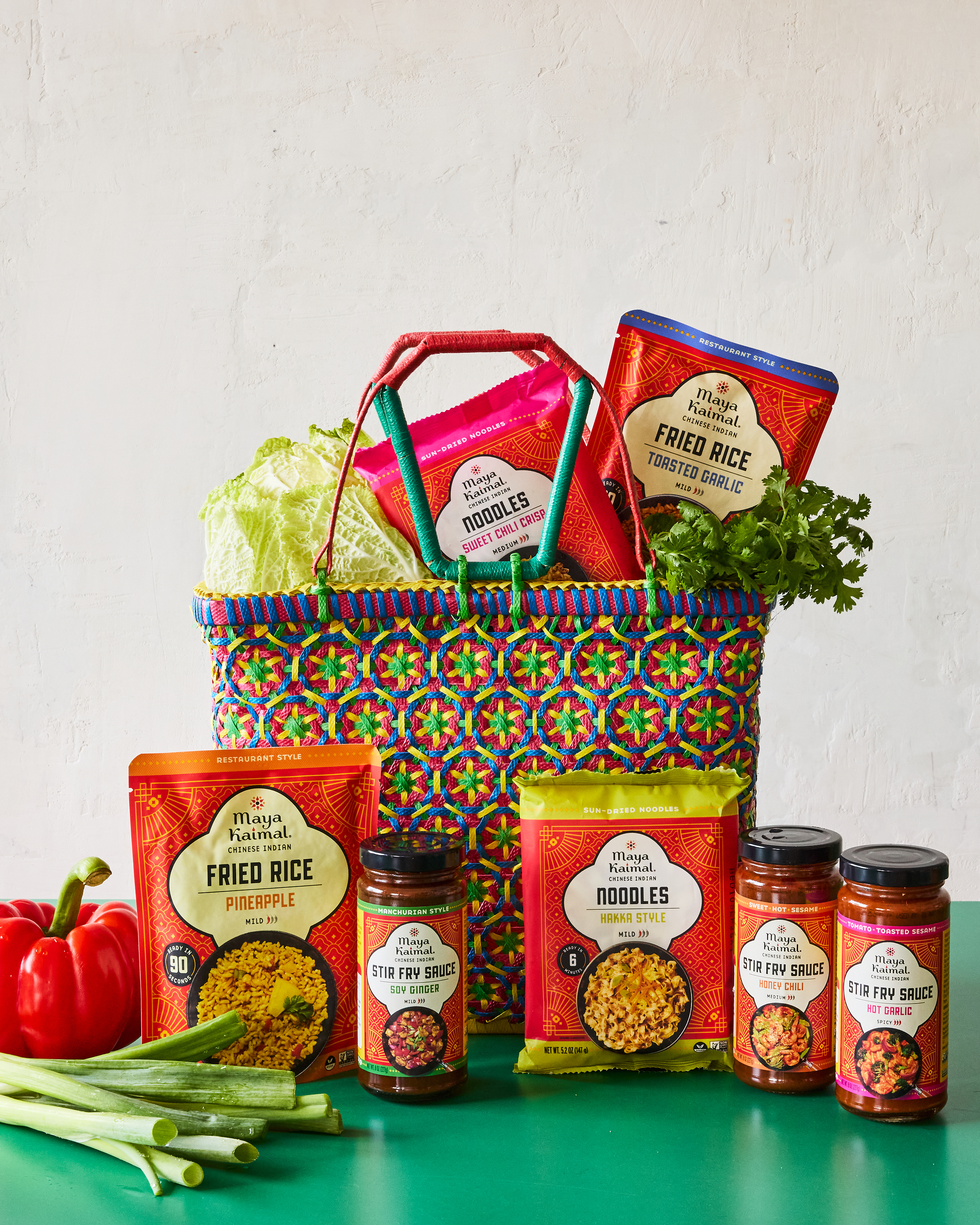
Maya Kaimal Foods is entering the Indo-Chinese segment with a seven-product line that spans ready-to-eat formats and cook-in sauces — the broadest ambient or refrigerated Chinese Indian offering to reach mainstream U.S. retail. The lineup includes Pineapple and Toasted Garlic Fried Rice, Hakka and Sweet Chili Crisp Noodles, and three Stir-Fry Sauces in Soy Ginger, Hot Garlic, and Honey Chili variants. Distribution is already live at Whole Foods Market nationwide for the fried rice and noodle SKUs, while Sprouts Farmers Market carries the fried rices and the stir-fry sauce trio.
The flavor architecture draws on the Indo-Chinese culinary tradition that emerged from Hakka Chinese immigrant communities in Kolkata beginning in the 19th century — a canon built on soy-forward, wok-fired technique cross-wired with Indian aromatics: ginger, green chili, and toasted garlic. For food scientists and co-manufacturers working in the ethnic sauce and meal-kit segment, the formulation challenge here is meaningful: preserving the Maillard-driven depth of wok cookery and the layered heat profile of a tarka-style temper in a shelf-stable or minimally processed retail format.
Formulation and Clean-Label Specs
All seven SKUs carry non-GMO certification and are formulated without preservatives or artificial flavors — positioning the line squarely within the clean-label tier that drives trial at natural and specialty retail. The brand has not published full specification sheets or TDS documents publicly, but its track record on Indian simmer sauces suggests careful attention to moisture content and pH control to achieve the required shelf life without synthetic stabilizers. The stir-fry sauces, as a pourable ambient format, present a more straightforward preservation pathway than the fried rice and noodle SKUs, which require texture integrity across thermal processing and distribution.
The launch extends the brand's "East Meets East" platform, which it tested with its Indian Style Chili Crisp — a product that fused the Indian tarka infusion technique with the Chinese chili crisp format and established proof-of-concept for cross-cultural flavor hybrids at natural retail. That earlier SKU served as an effective market-signal instrument: retail velocity data from that product likely informed category managers at Whole Foods and Sprouts when evaluating this broader Chinese Indian line.
Market Positioning
Indo-Chinese cuisine is one of the largest and most commercially active food segments in India, yet it has had negligible shelf presence in U.S. retail beyond foodservice. Maya Kaimal's move to claim that white space at scale — seven SKUs, two major natural-channel chains, simultaneous national rollout — is a calculated first-mover play in a category that global flavor trend trackers have flagged as an emerging priority for the next formulation cycle. Ingredient suppliers working in the soy sauce, chili oil, fermented black bean, and rice-noodle segments should note this as early demand signal for retail-facing Indo-Chinese formulations. Sauce and seasoning houses with Halal or Kosher certified soy and chili-based flavor systems are particularly well positioned to engage brands pursuing this space.
For further context on the clean-label sauce segment and ethnic flavor trends reshaping U.S. retail, see Ingredients Press coverage of natural flavor and seasoning innovation and plant-based sauce formulation.
Written by Michael Politz, Author of Guide to Restaurant Success: The Proven Process for Starting Any Restaurant Business From Scratch to Success (ISBN: 978-1-119-66896-1), Founder of Food & Beverage Magazine, the leading online magazine and resource in the industry. Designer of the Bluetooth logo and recognized in Entrepreneur Magazine's "Top 40 Under 40" for founding American Wholesale Floral, Politz is also the Co-founder of the Proof Awards and the CPG Awards and a partner in numerous consumer brands across the food and beverage sector.