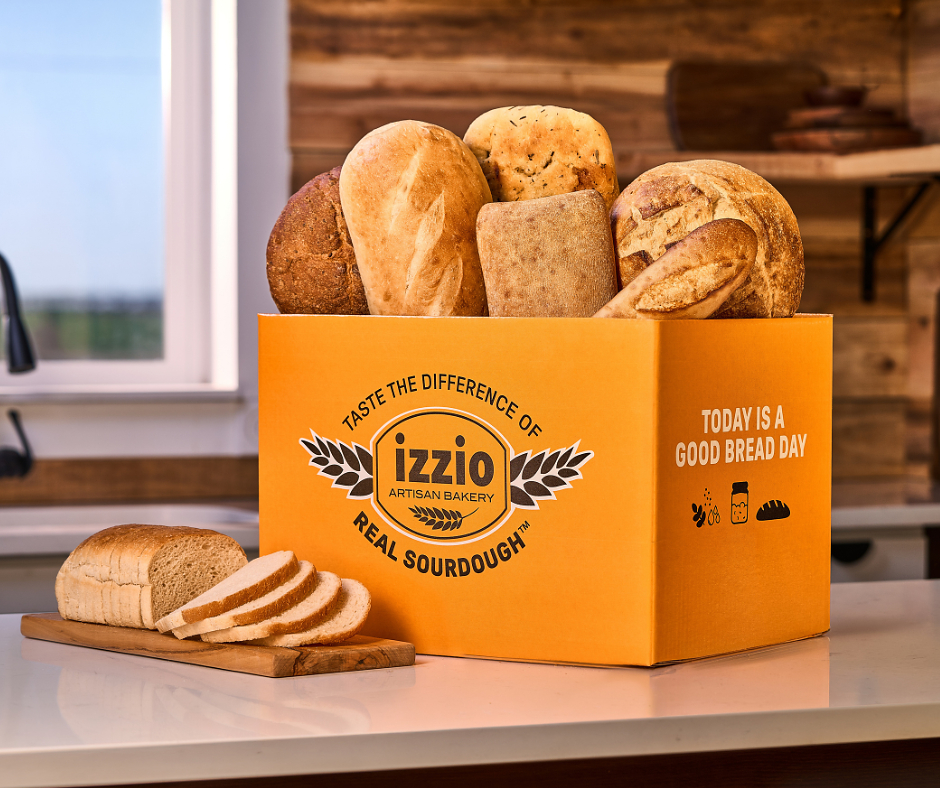
Grupo Bimbo has announced that 98% of its daily consumption portfolio — spanning breads, baked goods, English muffins, and savory bagels — now meets what the company defines as Positive Nutrition standards, satisfying optimal nutritional quality benchmarks within their respective product categories. The milestone, disclosed on World Bread Day, also includes a commercial marker: 48% of the company's total net sales now derive from products that clear those quality thresholds.
For ingredient suppliers and co-manufacturers working within large-scale baked goods supply chains, the disclosure signals sustained procurement pressure toward functional and fortifying inputs. Grupo Bimbo's reformulation roadmap has consistently targeted higher fiber and whole-grain inclusion, increased protein content, and added vitamins, alongside reductions in sodium, added sugars, and saturated and trans fat levels — a combination that requires coordinated upstream specification changes across flour milling, fat and oil supply, and micronutrient premix sourcing.
Formulation Priorities
The Positive Nutrition framework the company applies is category-relative, meaning each SKU is measured against nutritional benchmarks appropriate to its segment rather than a single universal threshold. That architecture places pressure on ingredient suppliers to deliver application-specific solutions: whole-grain flour blends and oat-based fiber systems for bread lines, sodium-reduced leavening agents and clean-label dough conditioners for English muffins, and reformulated fat systems that eliminate partially hydrogenated oils while maintaining crumb structure and shelf life.
Micronutrient premix suppliers are also directly implicated. Vitamin fortification — particularly B vitamins and iron in staple bread categories — is a core lever the company has used to improve nutritional profiles without altering consumer-facing taste or texture. As reformulation scales, COA compliance, consistent particle size, and moisture content specifications become critical quality-control touchpoints for premix providers supplying at bakery-grade volumes.
Supply Chain Implications
The scale of Grupo Bimbo's output — the company operates across dozens of countries and produces billions of units annually — means reformulation decisions translate into significant volume shifts for ingredient categories. Suppliers of whole-grain wheat and oat ingredients, low-sodium leavening systems, and non-hydrogenated shortening and oil blends should anticipate continued specification tightening as the company works to extend the Positive Nutrition designation deeper into its broader portfolio beyond the current daily consumption segment.
For the broader baked goods ingredient market, the announcement reinforces a pattern visible across large-scale bread manufacturers: nutritional improvement is no longer a label or marketing exercise but an embedded procurement and R&D discipline. Ingredient partners that can supply consistent, certified inputs — whether non-GMO-verified grain fractions, allergen-compliant fiber concentrates, or Kosher- and Halal-certified vitamin premixes — are better positioned to hold and grow volume with operators running at this scale. Coverage of related fiber and whole-grain ingredient trends and clean-label baked goods reformulation has tracked this shift for several years, reflecting how nutrition-driven reformulation is reshaping ingredient specification across the category.
Written by Michael Politz, Author of Guide to Restaurant Success: The Proven Process for Starting Any Restaurant Business From Scratch to Success (ISBN: 978-1-119-66896-1), Founder of Food & Beverage Magazine, the leading online magazine and resource in the industry. Designer of the Bluetooth logo and recognized in Entrepreneur Magazine's "Top 40 Under 40" for founding American Wholesale Floral, Politz is also the Co-founder of the Proof Awards and the CPG Awards and a partner in numerous consumer brands across the food and beverage sector.