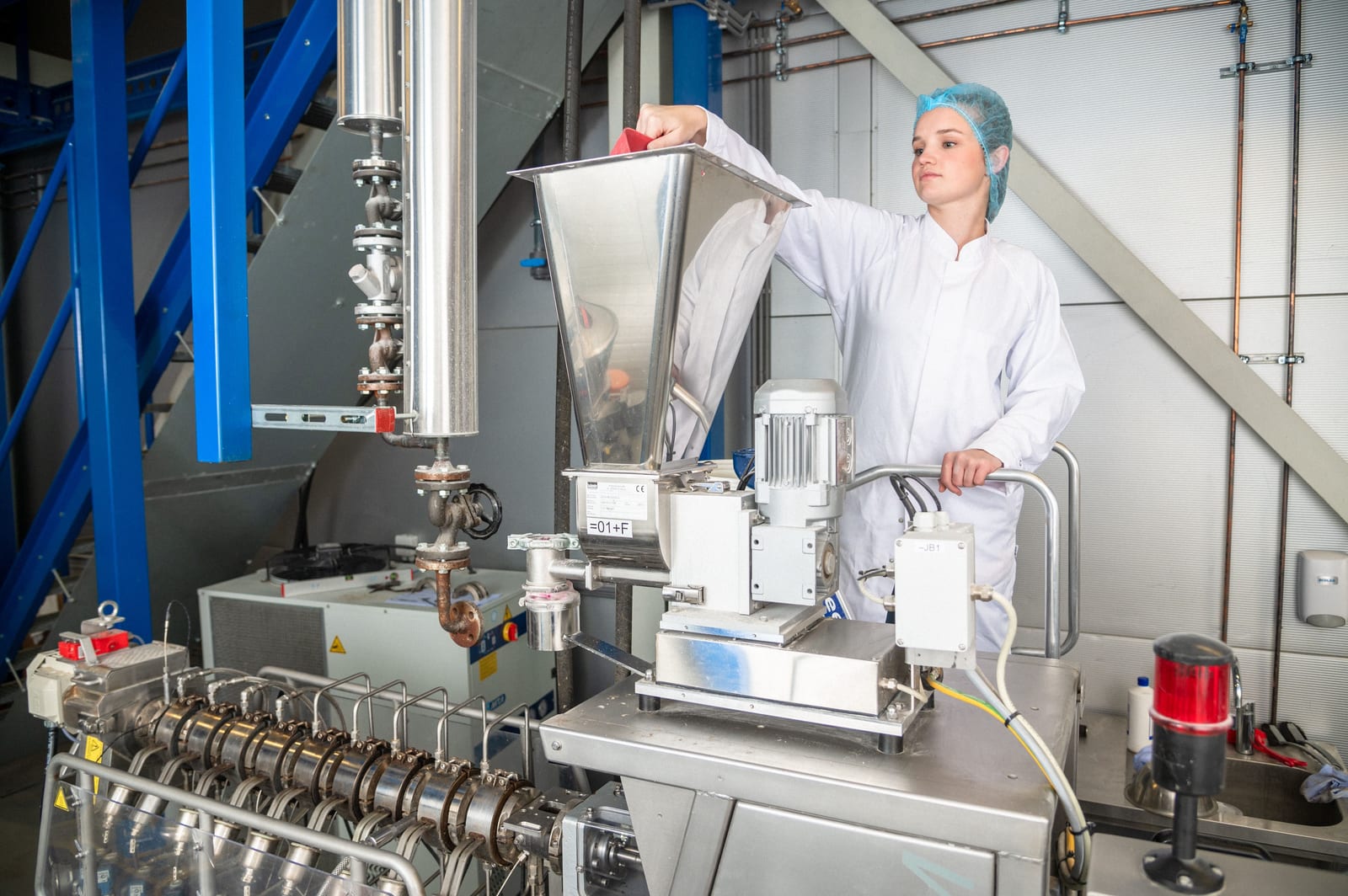
Partnership Brings Dry Extrusion to Commercial Scale Crespel & Deiters has begun producing textured vegetable proteins (TVP) using Happy Plant Protein's dry extrusion technology at its facility in Helmond, the Netherlands. The partnership marks the first industrial-scale deployment of the Finnish startup's patented one-step process by an established European ingredient manufacturer. The technology separates legume flour into protein and starch fractions while functionalizing both in a single extrusion step—eliminating the need for protein isolates, chemicals, or water-intensive processes. Crespel & Deiters is focusing initially on fava beans and peas, pulses not previously part of its raw material portfolio.
Neutral Taste, European Sourcing The resulting texturates are neutral in flavor and free of the bitter, beany off-notes typical of legume proteins. Manufacturers can tailor their texture, hydration behavior, and functionality for meat alternatives, hybrid products, ready meals, and snacks. "We now see ourselves as refiners of raw materials," says Philipp Deiters, CSO Food at Crespel & Deiters. "That is why we actively seek partnerships with companies whose technologies complement our portfolio and know-how. We see great potential in working with Happy Plant Protein." The Helmond facility, which has specialized in food extrusion since 1998, provides both production capacity and a technical center with pilot-scale equipment for innovation development.
Industry Recognition Happy Plant Protein's dry extrusion process was a finalist for "Most Innovative FoodTech Solution" at Food Ingredients Europe in Paris in December 2025, and again reached the finals at the Proteinnovation Summit in Austria in 2026. "Happy Plant Protein's dry extrusion allows us to produce functional food ingredients sustainably and cost-efficiently," Deiters says. "In Helmond, we combine the process with our extrusion know-how to produce neutral-tasting TVP from European pulses." Crespel & Deiters, family-owned since 1858, has historically focused on wheat refinement. The partnership expands its capability into legume-based ingredients at a time when manufacturers increasingly seek regionally sourced plant proteins to meet growing demand for meat alternatives and functional products.
Why It Matters
For food manufacturers, access to neutral-tasting, European-sourced plant proteins produced without chemical isolation or extensive water use addresses both sustainability and flavor challenges that have limited legume-based ingredient adoption in mainstream categories.
For more insights and trends in the food and beverage sector, check out more articles in The Food & Beverage Magazine family of publications.
Written by FBM Publications Editors