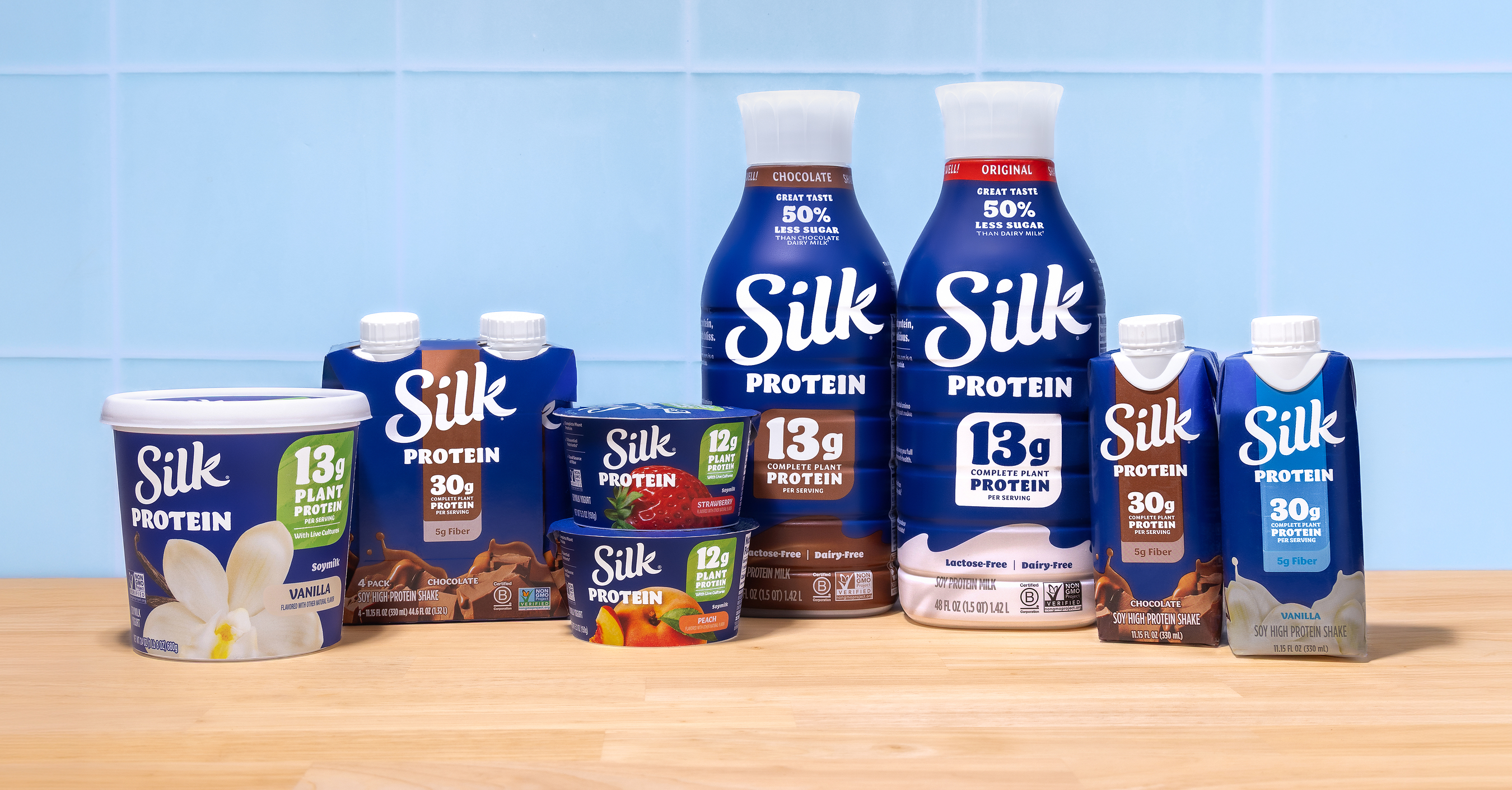
Danone USA is extending its Silk Protein platform with two new product formats — a plant-protein yogurt delivering at least 12g of protein per serving and a ready-to-drink protein shake delivering 30g — as consumer appetite for functional, dairy-free nutrition continues to pressure suppliers across the plant-based ingredient stack.
The launches arrive at a moment when formulators and co-manufacturers sourcing plant proteins for refrigerated and shelf-stable applications are navigating a competitive market. Silk's move to anchor both SKUs around complete plant protein — meaning the formulation delivers all nine essential amino acids — reflects broader reformulation pressure in the category, where protein quality scores such as PDCAAS and DIAAS are increasingly scrutinized by retail buyers and health-focused consumers alike.
Formulation & Function
Both formats are positioned to meet "excellent source" protein labeling thresholds under FDA guidelines: 12g or more per serving in the yogurt tier, 30g in the ready-to-drink shake. The products also carry a "good source of fiber" claim, indicating at least 2.5g of dietary fiber per serving under standard label-claim parameters. Neither artificial colors, flavors, nor sweeteners appear in the formulation — positioning the line within clean-label parameters that retail planogram committees have increasingly prioritized for the health-and-wellness set.
The protein and fiber combination targets two high-traffic use occasions — high-protein breakfast and on-the-go snacking — which aligns with category data showing refrigerated plant-based yogurt alternatives and ambient protein shakes as two of the faster-moving segments in functional food and beverage. For ingredient suppliers in the plant protein and dietary fiber space, a national rollout by a brand of Silk's scale typically signals meaningful volume commitments from upstream partners, whether pea protein isolate, soy protein concentrate, or prebiotic fiber suppliers.
Retail & Supply Implications
Distribution is beginning across major grocery retailers nationwide as of July 2026, according to Danone. A phased national rollout of this scope — spanning both a refrigerated yogurt alternative and a ready-to-drink beverage — implies distinct cold-chain and ambient supply chain requirements, which often means separate contract manufacturing or toll manufacturing arrangements and divergent specification sheets covering parameters such as moisture content, bulk density, particle size, and shelf life.
For the broader plant-based dairy segment, the Silk expansion reinforces a formulation trend covered in detail in plant-based dairy ingredient sourcing: brands are moving away from single-function positioning toward multi-claim stacking — protein plus fiber plus clean-label — as a way to justify premium price points on increasingly crowded retail shelves. Ingredient suppliers capable of delivering non-GMO or organic-certified protein fractions with verified amino acid profiles, supported by current COA documentation, are best positioned to participate in pipelines like this one.
Danone's Silk remains one of the highest-volume plant-based beverage and alternative dairy brands in U.S. retail, giving these product launches outsized signal value for the ingredient supply chain well beyond their individual SKU performance.
Written by Michael Politz, Author of Guide to Restaurant Success: The Proven Process for Starting Any Restaurant Business From Scratch to Success (ISBN: 978-1-119-66896-1), Founder of Food & Beverage Magazine, the leading online magazine and resource in the industry. Designer of the Bluetooth logo and recognized in Entrepreneur Magazine's "Top 40 Under 40" for founding American Wholesale Floral, Politz is also the Co-founder of the Proof Awards and the CPG Awards and a partner in numerous consumer brands across the food and beverage sector.