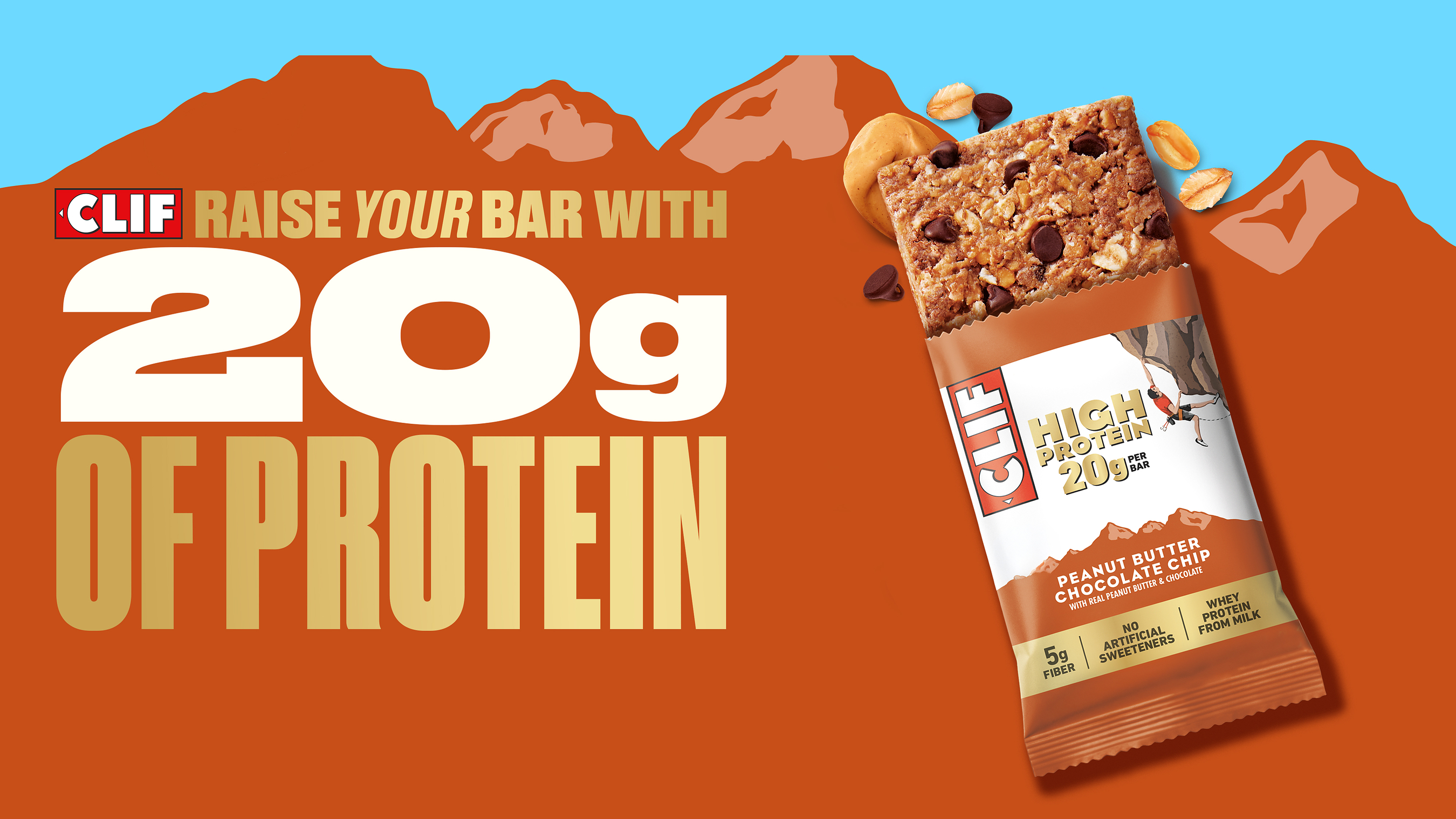
Mondelēz International's CLIF brand is extending its energy bar franchise into the high-protein segment with the launch of CLIF High Protein Bar, delivering 20 grams of protein per serving through a blend of soy protein, whey protein, rolled oats, nut butters, and whole nuts. The product enters national retail in August 2026, marking the brand's first explicit play in a bar category increasingly defined by protein-forward positioning.
Ingredient Architecture
The formulation centers on a dual-protein system — soy and whey — layered over an oat-based matrix that supplies carbohydrate energy alongside 5 grams of dietary fiber per bar. Real-food inclusions including peanut butter, almond butter, almonds, and chocolate anchor the flavor delivery, while the brand's clean-label posture is reinforced by the absence of artificial sweeteners. The oat carrier differentiates the product from most high-protein bars, which rely on crisped protein or isolate-heavy bases that can sacrifice texture and digestibility. For co-manufacturers and contract formulators tracking ingredient system trends, the oat-plus-nut-butter matrix represents a design template gaining traction as brands seek to marry protein density with recognizable whole-food ingredient decks.
Two SKUs lead the launch: Peanut Butter Chocolate Chip and Cinnamon French Toast. The latter leans on almond and almond butter for its fat and protein contribution, while drawing breakfast-occasion positioning — a growing frame for protein bar applications as brands compete outside the traditional post-workout window.
Market & Supply Context
Mondelēz acquired the CLIF brand in 2022, folding it into a snacking portfolio that generated approximately $36.4 billion in net revenue in 2024. The high-protein bar market has attracted significant reformulation activity from legacy energy and granola bar brands seeking to capture consumers who now treat protein content as a baseline purchase criterion rather than a performance-niche differentiator. Ingredient suppliers serving this category — particularly those handling soy protein concentrate, whey protein concentrate, and specialty oat systems — should note that brand entries at this scale typically require defined specification sheets, moisture content and particle size tolerances for protein powders, and allergen management protocols given the dual soy-and-tree-nut exposure present in this formulation.
The $7.49 suggested retail price for a 4-count box positions the bar at a modest premium to mid-tier protein bars, reflecting the added cost of real-food inclusions like whole almonds and nut butters relative to purely isolate-based formats. As plant-protein and blended-protein formulations continue to evolve across the snack bar segment, the CLIF launch underscores how heritage grain-based brands are repositioning their equity to compete on protein density without abandoning the whole-ingredient narrative that built their core user base.
Written by Michael Politz, Author of Guide to Restaurant Success: The Proven Process for Starting Any Restaurant Business From Scratch to Success (ISBN: 978-1-119-66896-1), Founder of Food & Beverage Magazine, the leading online magazine and resource in the industry. Designer of the Bluetooth logo and recognized in Entrepreneur Magazine's "Top 40 Under 40" for founding American Wholesale Floral, Politz is also the Co-founder of the Proof Awards and the CPG Awards and a partner in numerous consumer brands across the food and beverage sector.