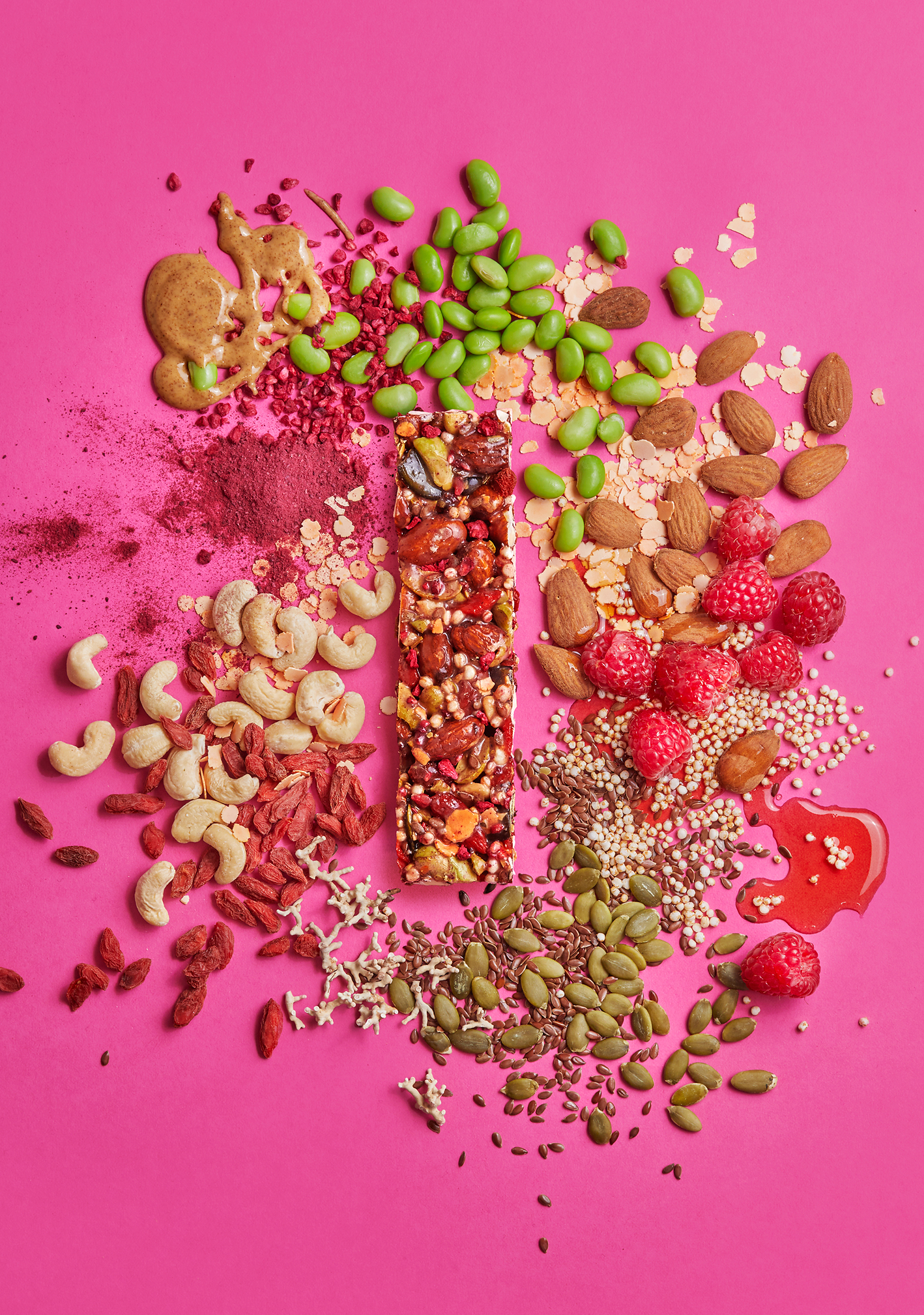
ZOE, the gut health science company behind the world's largest nutrition study, has entered the U.S. snack bar category with its Gut Health Bar, a whole-plant formulation delivering 8g of dietary fiber and 7g of plant protein per bar across more than 10 ingredient types. The launch marks the company's first move beyond its digital health app and Daily30 supplement, extending a science-led positioning into the high-growth functional snack segment.
For ingredient suppliers and co-manufacturers tracking formulation trends, the bar's architecture is notable: ZOE's nutrition scientists deliberately preserved natural food-matrix structures — keeping plant cell walls and fibrous networks largely intact — so substrates travel further into the lower gastrointestinal tract to fuel gut microbiota. This approach distinguishes the product from fiber-fortified bars that rely on isolated or concentrated fiber ingredients such as inulin, chicory root extract, or oat beta-glucan.
Ingredient Architecture
The formulation draws on a deliberately diverse plant roster: almonds, cashews, edamame, red lentils, flaxseeds, pumpkin seeds, seaweed, and kombucha are among the named inclusions. That combination of legumes, seeds, algae-derived ingredients, and fermented inputs reflects a growing formulation philosophy — sometimes called "plant diversity stacking" — that prioritises microbiome substrate variety over single high-dose actives. ZOE positions the bar as a practical vehicle for its recommended 30-plant-per-week dietary target, a metric its research program has used to correlate with microbiome richness.
The chocolate component also drew deliberate sourcing scrutiny. ZOE selected a 70% dark chocolate without the lecithin or polyglycerol polyricinoleate (PGPR) emulsifiers standard in confectionery coatings and inclusions, citing clean-label positioning. For chocolate and coating suppliers, that specification signals continued pressure on emulsifier use even in ambient snack formats — a trend already reshaping European confectionery supply chains under evolving clean-label expectations. Professor Sarah Berry, Chief Science Officer at ZOE and Professor of Nutritional Sciences at King's College London, noted that "for too long, the snacking food category has optimized for convenience over nutritional quality and gut health," framing the bar as a formulation rebuttal to that dynamic.
Market & Supply Context
The functional snack bar segment sits within a broader dietary fiber opportunity: ZOE's own commissioned survey of 1,000 U.S. adults found that 70% of self-described healthy eaters cannot identify the recommended daily fiber intake, and 64% report feeling misled by on-pack nutrition claims. That consumer knowledge gap is commercially significant for ingredient suppliers — it points to continued demand for products where fiber and plant protein are delivered through recognizable, whole-food inclusions rather than fortification, reducing the formulation complexity and regulatory exposure associated with structure/function claims.
The bar is sold direct-to-consumer via ZOE.com at $50 per 12-bar box, or $45 per month on subscription — a price point that reflects premium positioning rather than mass-market distribution. No retail channel partners or co-manufacturing arrangements were disclosed. The launch is U.S.-focused, with ZOE's existing membership base providing an immediate qualified customer set for initial volume. Suppliers interested in ZOE's ingredient standards — particularly around emulsifier-free chocolate, certified seaweed, and kombucha inclusions — should note that no sourcing partners, certification status (organic, non-GMO, Kosher, Halal), or minimum order quantities were specified in available materials.
For the plant-based protein and functional fiber supply chains, ZOE's bar signals that science-backed brands are increasingly willing to constrain supplier selection to ingredients that survive processing without significant structural degradation — a specification that rewards suppliers investing in gentle processing and particle integrity over bulk commodity supply.
Written by Michael Politz, Author of Guide to Restaurant Success: The Proven Process for Starting Any Restaurant Business From Scratch to Success (ISBN: 978-1-119-66896-1), Founder of Food & Beverage Magazine, the leading online magazine and resource in the industry. Designer of the Bluetooth logo and recognized in Entrepreneur Magazine's "Top 40 Under 40" for founding American Wholesale Floral, Politz is also the Co-founder of the Proof Awards and the CPG Awards and a partner in numerous consumer brands across the food and beverage sector.