The Redesign
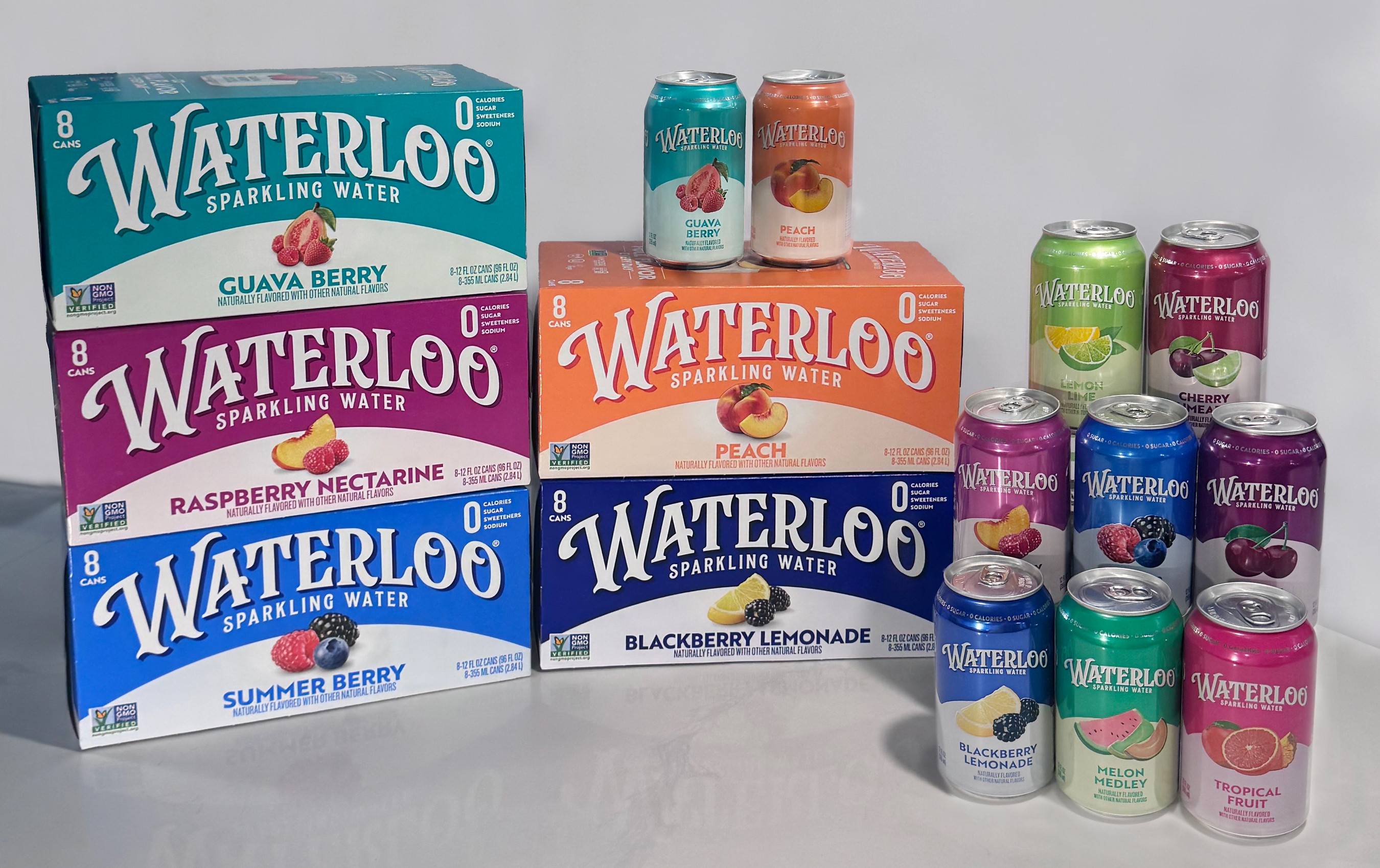
Waterloo Sparkling Water is rolling out its first packaging overhaul since the brand's 2017 launch, introducing more vibrant, saturated colors, strengthened flavor cues, and a modernized brand mark across every can and carton format sold at retail nationwide. Developed with brand agency CBX, the refresh is the most significant visual change in the independently owned Austin, Texas brand's history and is already appearing on shelf and in online channels.
The commercial rationale is straightforward: the sparkling water segment has grown crowded enough that shelf differentiation has become a supply-chain and retail execution problem as much as a marketing one. Waterloo's CMO Kathy Maurella cited 3X category growth and +17% household penetration growth in the first half of 2026 as the business foundation that made the investment timely. Mark Christou, Principal and Chief Creative Officer at CBX, noted that most competing brands are beginning to blur together at shelf — a visibility risk that compresses velocity for any brand without a strong visual identity.
Formulation & Ingredient Claims
The packaging change carries no formulation adjustments. All Waterloo flavors remain custom-crafted with Non-GMO Project Verified natural flavors and purified carbonated water, free of calories, sugar, sweeteners, and sodium — a clean-label positioning that has anchored the brand's retail story since launch. The cans continue to use BPA-NI liners, an attribute increasingly relevant to buyers negotiating category placement with health-focused retailers. For suppliers of natural flavors and carbonated beverage ingredients, Waterloo's Non-GMO Project Verified status requires that all upstream flavor inputs maintain corresponding non-GMO supply chain documentation and COA compliance.
Market Context
The sparkling water category sits inside a broader better-for-you beverage ingredient dynamic where clean-label claims — no sugar, no sweeteners, non-GMO natural flavors — are table stakes for premium positioning. Waterloo's decision to invest in packaging research, including multiple rounds of eye-tracking studies and concept testing, reflects the growing role that pack architecture plays in supporting in-store velocity metrics that ingredient suppliers and co-manufacturers use to gauge brand health before entering or renewing supply agreements. A brand reporting 3X category growth in a competitive set is a meaningful procurement signal: ingredient and packaging material suppliers should expect volume trajectories to tighten minimum order quantities and push specification sheets toward higher throughput tolerances. The concurrent website relaunch at drinkwaterloo.com, designed for improved shoppability, also positions the brand to support direct retail discovery — a channel increasingly important to beverage brands managing omnichannel inventory commitments.
Written by Michael Politz, Author of Guide to Restaurant Success: The Proven Process for Starting Any Restaurant Business From Scratch to Success (ISBN: 978-1-119-66896-1), Founder of Food & Beverage Magazine, the leading online magazine and resource in the industry. Designer of the Bluetooth logo and recognized in Entrepreneur Magazine's "Top 40 Under 40" for founding American Wholesale Floral, Politz is also the Co-founder of the Proof Awards and the CPG Awards and a partner in numerous consumer brands across the food and beverage sector.