
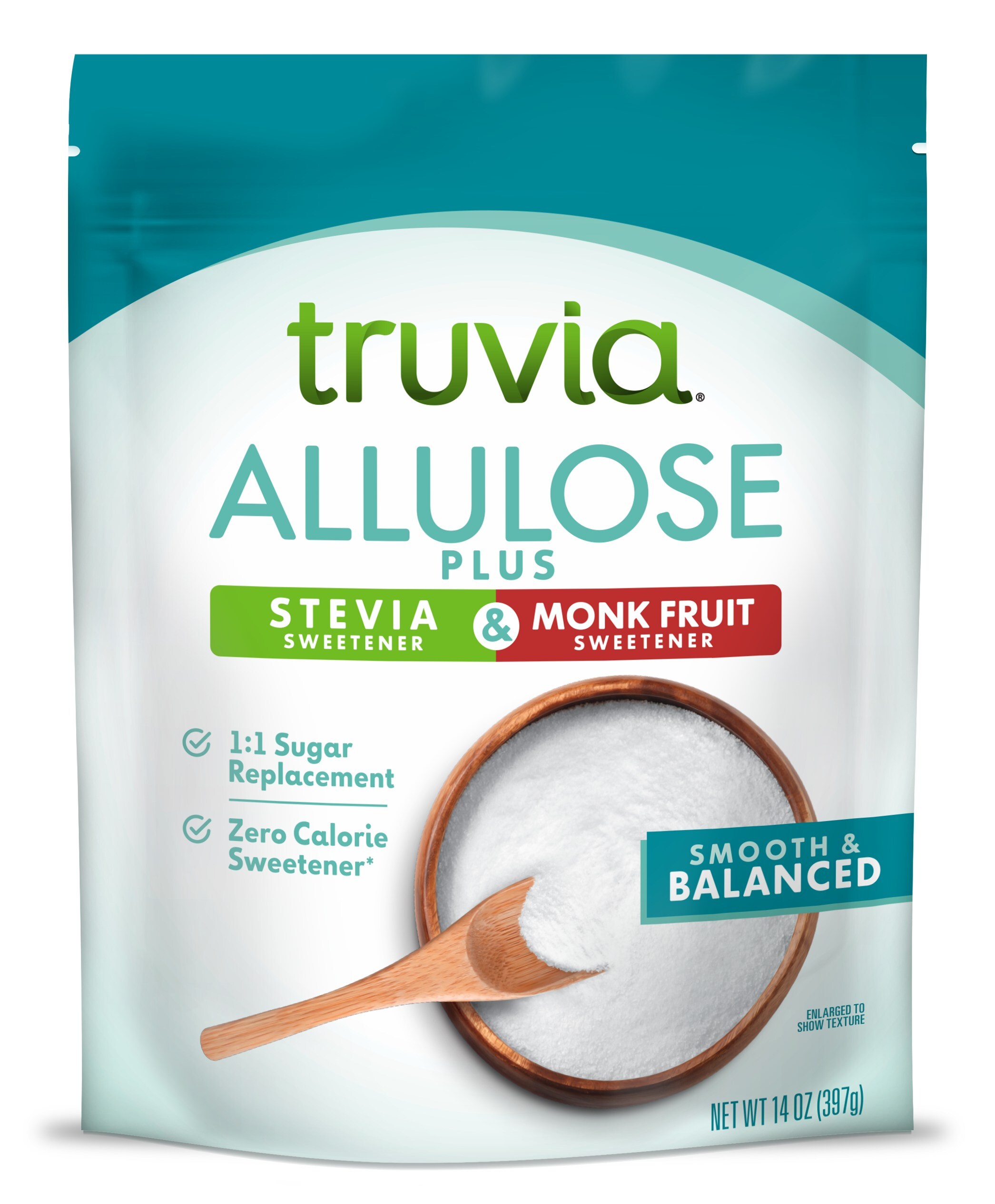
Truvia has expanded its plant-based sweetener portfolio with the launch of Truvia® Allulose Plus Stevia Sweetener & Monk Fruit Sweetener, a tri-blend system engineered to replicate the sensory profile of sucrose while delivering zero calories per serving. The addition signals a deliberate move by the brand to address one of the most persistent formulation challenges in the better-for-you segment: closing the taste gap between high-intensity sweeteners and the bulk, mouthfeel, and temporal profile of sugar.
The tri-blend architecture is significant from a functional standpoint. Allulose — a rare sugar classified by FDA as not a sugar for nutrition labeling purposes — contributes bulk, humectancy, and Maillard browning behavior that neither stevia nor monk fruit can deliver on their own. Steviol glycosides (stevia) and mogrosides (monk fruit) supply the high-intensity sweetness load at low usage levels, while their respective off-note profiles tend to offset each other in combination, a well-established blending strategy in sweetener science. The net effect is a multi-functional sweetener system with improved sugar-mimicry versus any single-ingredient alternative. Formulators working on reduced-sugar baked goods, tabletop packets, flavored dairy, or ready-to-mix beverage powders would be the primary target audience for this type of specification.
Truvia is a brand within Cargill's sweetener portfolio, giving the product line access to Cargill's global stevia supply chain — one of the largest vertically integrated stevia operations in the industry, spanning leaf cultivation through proprietary extraction. Monk fruit and allulose sourcing details, including country of origin, non-GMO verification status, and organic-certification eligibility, have not been disclosed in the launch materials. Buyers evaluating this blend for retail-facing or food-service applications will want to request a full specification sheet, COA parameters (moisture content, particle size, bulk density), and an allergen statement prior to qualification. Shelf life and recommended storage conditions should be confirmed via the TDS before co-manufacturer or contract manufacturing integration.
The launch arrives at a commercially active moment for the alternative sweetener category. Consumer demand for zero- and low-calorie products remains a primary growth driver across North American retail, while regulatory and labeling tailwinds — including FDA's allulose carve-out from added-sugar declarations — make allulose-forward blends increasingly attractive for brands managing nutrition-facts optics. The tri-blend format also aligns with broader clean-label positioning strategies, as all three ingredient sources carry natural-claim eligibility. For ingredient buyers and R&D teams tracking the sweetener and sugar-reduction space, this SKU represents a commercially ready, off-the-shelf option that reduces the internal blending and qualification burden typically associated with custom tri-blend development. Teams benchmarking plant-based sweetener systems for beverage and dairy applications should place this product on their next evaluation roster.
Written by Michael Politz, Author of Guide to Restaurant Success: The Proven Process for Starting Any Restaurant Business From Scratch to Success (ISBN: 978-1-119-66896-1), Founder of Food & Beverage Magazine, the leading online magazine and resource in the industry. Designer of the Bluetooth logo and recognized in Entrepreneur Magazine's "Top 40 Under 40" for founding American Wholesale Floral, Politz is also the Co-founder of the Proof Awards and the CPG Awards and a partner in numerous consumer brands across the food and beverage sector.