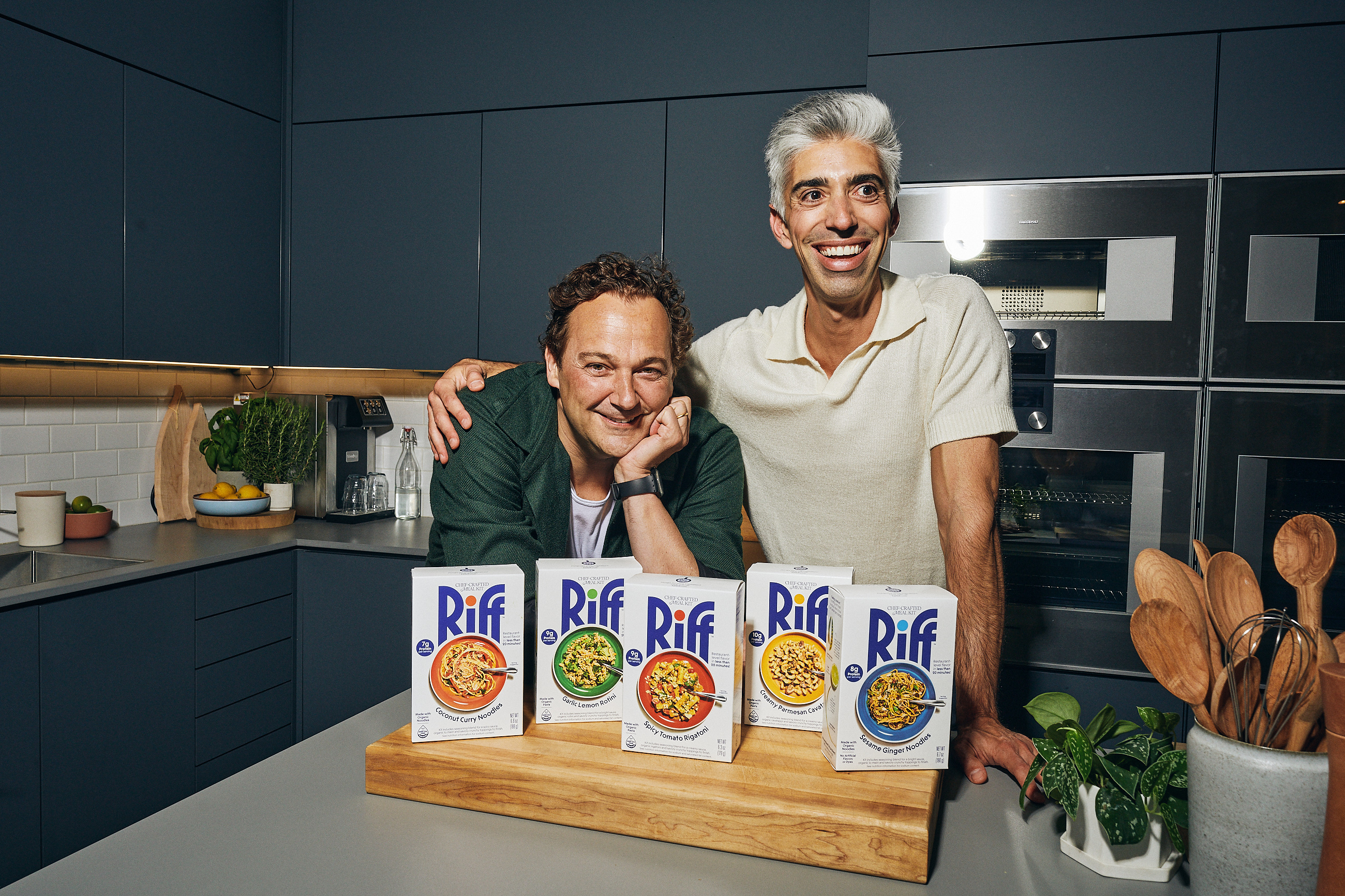
Chef Daniel Humm of Eleven Madison Park and CPG operator Mark Ramadan have launched Riff, a line of shelf-stable meal kits built on organic bronze-cut pasta, air-dried noodles, and clean-label sauce systems — retailing for $6.99 per box at Target locations nationwide and direct-to-consumer online. The debut collection spans five SKUs and represents an 18-month R&D effort by Humm's culinary team to replicate restaurant-grade flavor and texture in an ambient-shelf format.
Ingredient Architecture
Every Riff box is structured around three functional components: an organic pasta or noodle base, a chef-formulated dry seasoning blend designed to reconstitute into a sauce, and a crunchy topping finish. The pasta portfolio leans on organic bronze-cut, slow-dried rigatoni, cavatappi, and rotini — formats prized in professional kitchens for their rougher surface area and superior sauce adhesion. The noodle-based SKUs use organic air-dried lo mein, a production method that preserves texture without the plasticizers or emulsifiers common in conventional instant noodle systems.
Sauce systems are built on dehydrated vegetables, real spices, and dairy-derived ingredients including buttermilk and parmesan — deliberately avoiding artificial flavors and engineered flavor-masking agents. Co-founder Mark Ramadan, whose prior exits include Sir Kensington's and Hu Kitchen, positioned the formulation philosophy explicitly against ultra-processed shortcuts: "We started with quality ingredients, like organic bronze-cut pasta and sauces built on real spices and dehydrated vegetables, rather than artificial crutches or engineered flavorings."
Retail and Supply Context
The shelf-stable format is central to Riff's supply chain story. Unlike chilled or frozen meal kit competitors, the ambient positioning eliminates cold-chain logistics, reduces spoilage risk for retail partners, and opens standard center-store planogram space — a significant operational advantage for co-manufacturers and distributors managing SKU complexity. For ingredient suppliers, the clean-label, real-ingredient spec sheet approach implies sourcing requirements around organic-certified grains, Non-GMO Project-aligned seasoning inputs, and allergen-controlled dairy components. No MOQ or contract manufacturing details were disclosed at launch.
The five-SKU lineup — Spicy Tomato Rigatoni, Creamy Parmesan Cavatappi, Garlic Lemon Rotini, Sesame Ginger Noodles, and Coconut Curry Noodles — maps across both Italian pasta and Asian noodle application categories, signaling sourcing diversity across at least two distinct grain and processing supply chains. The coconut milk and sesame-forward SKUs introduce additional commodity exposure in tree-nut-adjacent fats and oilseed ingredients.
Market Position
Riff is entering a center-store segment that has seen sustained pressure from private label and commodity pasta brands while simultaneously facing consumer migration toward fresh and refrigerated meal solutions. The brand's bet is that an organic, chef-credentialed, ambient kit at a sub-$7 price point can reactivate the pantry aisle for ingredient-conscious shoppers — a cohort that currently skews toward perimeter-of-store purchasing. That thesis aligns with broader clean-label and natural-ingredient trends reshaping how brands and their ingredient partners approach center-store reformulation.
For suppliers tracking organic pasta and grain ingredient demand, Riff's retail launch at a national mass channel represents a meaningful signal: premium organic grain formats — historically confined to specialty or natural grocery — are now being positioned for mainstream velocity at scale. Whether the brand's ingredient spec requirements translate into meaningful volume will depend on Target sell-through, but the supply-chain architecture Riff has built is designed for rapid expansion.
Written by Michael Politz, Author of Guide to Restaurant Success: The Proven Process for Starting Any Restaurant Business From Scratch to Success (ISBN: 978-1-119-66896-1), Founder of Food & Beverage Magazine, the leading online magazine and resource in the industry. Designer of the Bluetooth logo and recognized in Entrepreneur Magazine's "Top 40 Under 40" for founding American Wholesale Floral, Politz is also the Co-founder of the Proof Awards and the CPG Awards and a partner in numerous consumer brands across the food and beverage sector.