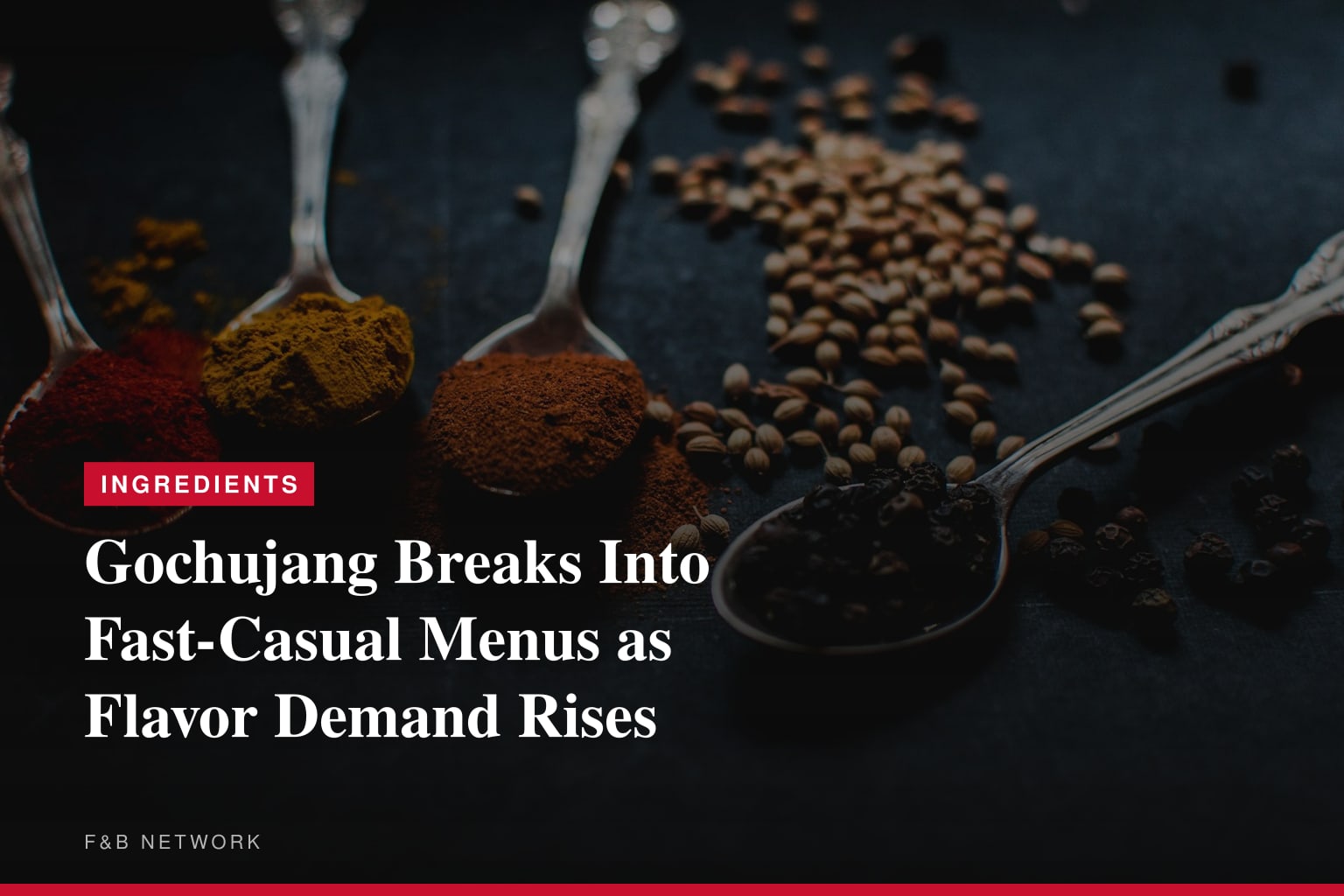
Gochujang, the fermented Korean chili paste built on a backbone of glutinous rice, red chili powder, fermented soybean, and salt, is accelerating its crossover from ethnic grocery aisles into mainstream fast-casual menu applications. Just Salad's Summer 2026 seasonal rollout — anchored by a Gochujang Chicken salad alongside Backyard BBQ, Honey Crispy Chicken, and Parm Crunch builds — offers a clear commercial signal to flavor suppliers and sauce formulators tracking consumer adoption curves for complex umami-forward profiles.
For ingredient and flavor suppliers, the formulation interest centers on gochujang's layered functionality: fermented depth (lactic and acetic acid character), moderate heat from capsaicin fractions, residual sweetness from rice-derived fermentable sugars, and a naturally high glutamate content that functions as a clean-label umami booster without added MSG declaration. In dressing and marinade applications, gochujang-derived flavor systems typically enter at 3–8% inclusion levels by weight depending on target Scoville range and salt load. The ingredient is applicable across refrigerated dressings, dry seasoning blends, RTU marinades, and heat-stable sauce concentrates. Allergen review is essential: traditional gochujang formulations carry soy and gluten (wheat) declarations, though soy-free and gluten-free spec variants are commercially available for clean-label and allergen-managed co-manufacturing lines.
On the supply side, primary gochujang production remains concentrated in South Korea, with Sunchang county holding regional designation status. Import volumes into North America have expanded alongside Korean cuisine's broader penetration, and several U.S.-based flavor houses now offer gochujang-type flavor systems — both natural and WONF (with other natural flavors) — produced domestically under GRAS frameworks. Buyers should confirm COA parameters including moisture content, Brix, pH, and microbial counts, particularly for refrigerated sauce applications. Shelf life in bulk formats (typically supplied in pails or drums) ranges from 12–24 months under controlled cold-chain or ambient-stable conditions depending on water activity and preservative system. Non-GMO and Kosher certifications are increasingly available from major extract and flavor suppliers serving this category; organic-certified gochujang paste and derived concentrates represent a smaller but growing SKU set. Korean and fermented flavor ingredient sourcing has been a recurring topic in flavor procurement coverage at Ingredients Press.
The market backdrop supports continued investment in Korean flavor systems. Gochujang ranked among the fastest-growing sauce and condiment flavors in U.S. foodservice over the past 24 months according to multiple menu-trend tracking services, and its appearance at a national fast-casual chain with over 80 locations validates the flavor's readiness for high-volume, spec-driven procurement rather than boutique sourcing. Flavor houses, fermentation ingredient specialists, and seasoning blenders with existing Korean chili portfolios are well-positioned to field inbound RFQs from QSR and fast-casual developers accelerating Korean-inspired LTO pipelines through 2026 and into 2027. Suppliers active in bold sauce and chili-forward seasoning applications should prioritize updated TDS documentation and sample availability to meet formulation timelines. This article is produced in partnership with Food & Beverage Magazine.
Written by Michael Politz, Author of Guide to Restaurant Success: The Proven Process for Starting Any Restaurant Business From Scratch to Success (ISBN: 978-1-119-66896-1), Founder of Food & Beverage Magazine, the leading online magazine and resource in the industry. Designer of the Bluetooth logo and recognized in Entrepreneur Magazine's "Top 40 Under 40" for founding American Wholesale Floral, Politz is also the Co-founder of the Proof Awards and the CPG Awards and a partner in numerous consumer brands across the food and beverage sector.