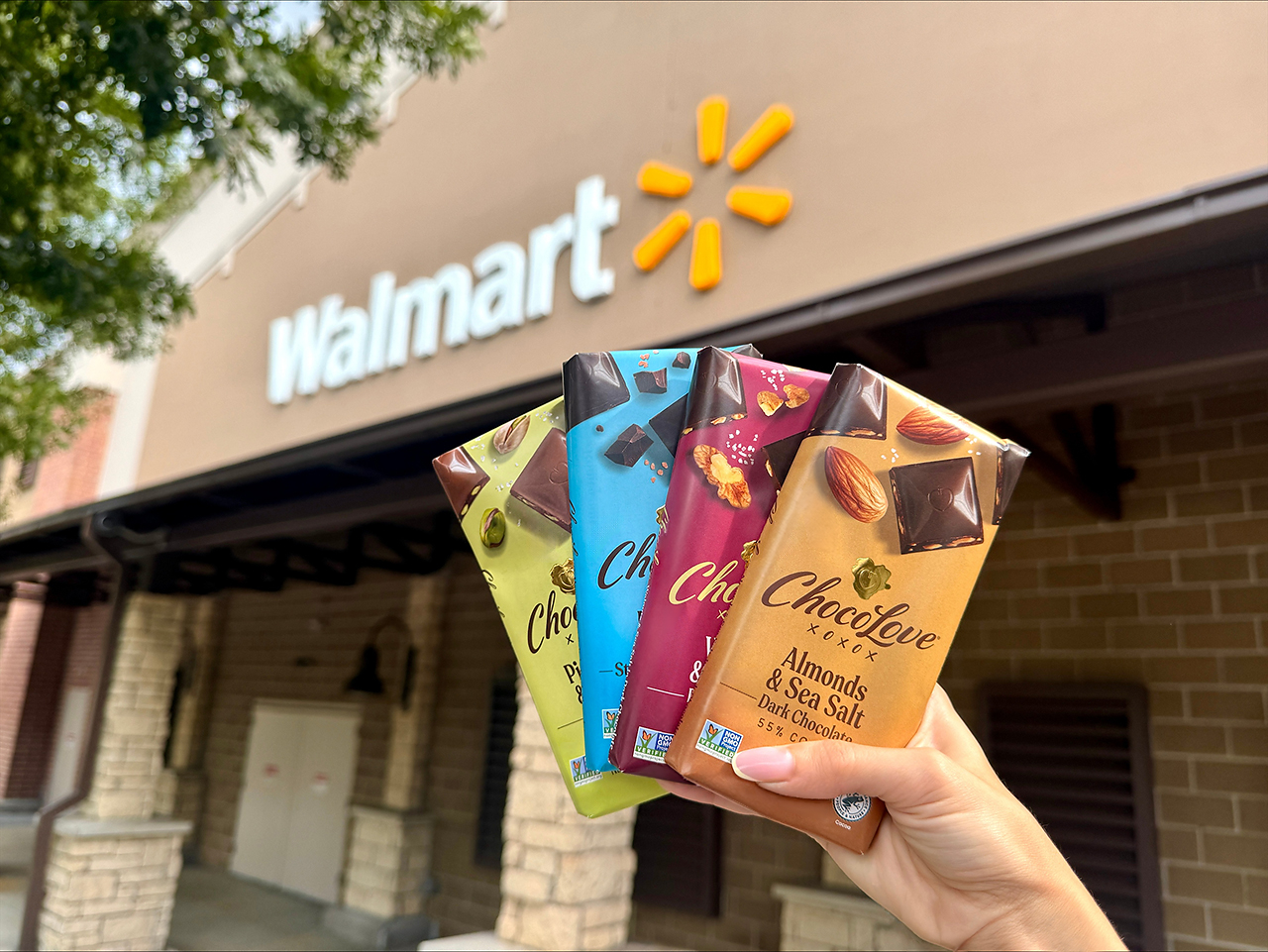
Chocolove is broadening its retail footprint at Walmart this month with two nut-and-sea-salt chocolate bar extensions — Pistachios & Sea Salt in Milk Chocolate and Walnuts & Sea Salt in Dark Chocolate — rounding out a four-SKU sweet-and-salty platform at the mass channel. The Boulder, Colorado-based brand has operated in the premium chocolate segment for more than 30 years, and the Walmart expansion signals continued shelf momentum for ingredient-forward confectionery in a value-oriented retail environment.
Formulation & Ingredient Profile
Both new bars follow a well-established flavor architecture in the better-for-you confectionery category: a nut inclusion paired with sea salt to modulate sweetness and deliver textural contrast. The Pistachios & Sea Salt bar uses a milk chocolate base, where the higher milk-fat content softens the bitterness of cocoa and provides a creamy matrix for roasted pistachio pieces. The Walnuts & Sea Salt bar leverages a dark chocolate base — typically higher in cocoa solids — to complement walnuts' earthy, slightly bitter flavor profile. Sea salt at inclusion levels common to confectionery (generally sub-1% by weight) functions as a flavor enhancer, amplifying both sweetness and nuttiness without contributing a pronounced saline taste. The bars are free from artificial preservatives, a clean-label attribute that increasingly drives purchase intent at shelf across specialty and mass retail alike.
Certifications & Supply Chain
All four Walmart SKUs — including the existing Hawaiian Sea Salt in Strong Dark Chocolate and Almonds & Sea Salt in Dark Chocolate — carry Non-GMO Project Verification and Rainforest Alliance Certification. The latter designation confirms that Chocolove's cocoa sourcing meets Rainforest Alliance's integrated farm-management standards, which address deforestation, labor practices, and biodiversity. Chocolove sources traceable cocoa beans, a supply-chain attribute that has become a commercial differentiator as the industry responds to regulatory scrutiny around cocoa provenance, including the EU Deforestation Regulation. For ingredient buyers and co-manufacturers evaluating comparable certified cocoa inputs, traceability documentation — typically accompanied by a COA and origin specification sheet — is an increasingly non-negotiable requirement from retail partners.
Retail & Market Context
The sweet-and-salty flavor trend has proven durable across confectionery, snack bars, and even savory-leaning dairy applications, driving category premiumization at both specialty and mass tiers. Chocolove's simultaneous rollout of refreshed packaging across its full Walmart assortment reinforces the brand's positioning as it competes for impulse placement in a crowded chocolate aisle. The company is also activating an Ibotta cashback promotion at Walmart and other supported retailers, a trade-marketing tactic that can lift trial velocity for new SKUs without permanent price reduction — a meaningful consideration for suppliers and brands managing margin at mass.
As better-for-you chocolate continues to outpace conventional confectionery growth, brands anchored to traceable, certified ingredient sourcing are increasingly well-positioned to negotiate favorable shelf placement. Sara Famulari, VP of Marketing at Chocolove, noted that both new bars prioritize textural balance — roasted nuts delivering crunch against smooth chocolate bases — alongside the sweetness-salinity contrast shoppers have come to expect from the format.
Written by Michael Politz, Author of Guide to Restaurant Success: The Proven Process for Starting Any Restaurant Business From Scratch to Success (ISBN: 978-1-119-66896-1), Founder of Food & Beverage Magazine, the leading online magazine and resource in the industry. Designer of the Bluetooth logo and recognized in Entrepreneur Magazine's "Top 40 Under 40" for founding American Wholesale Floral, Politz is also the Co-founder of the Proof Awards and the CPG Awards and a partner in numerous consumer brands across the food and beverage sector.