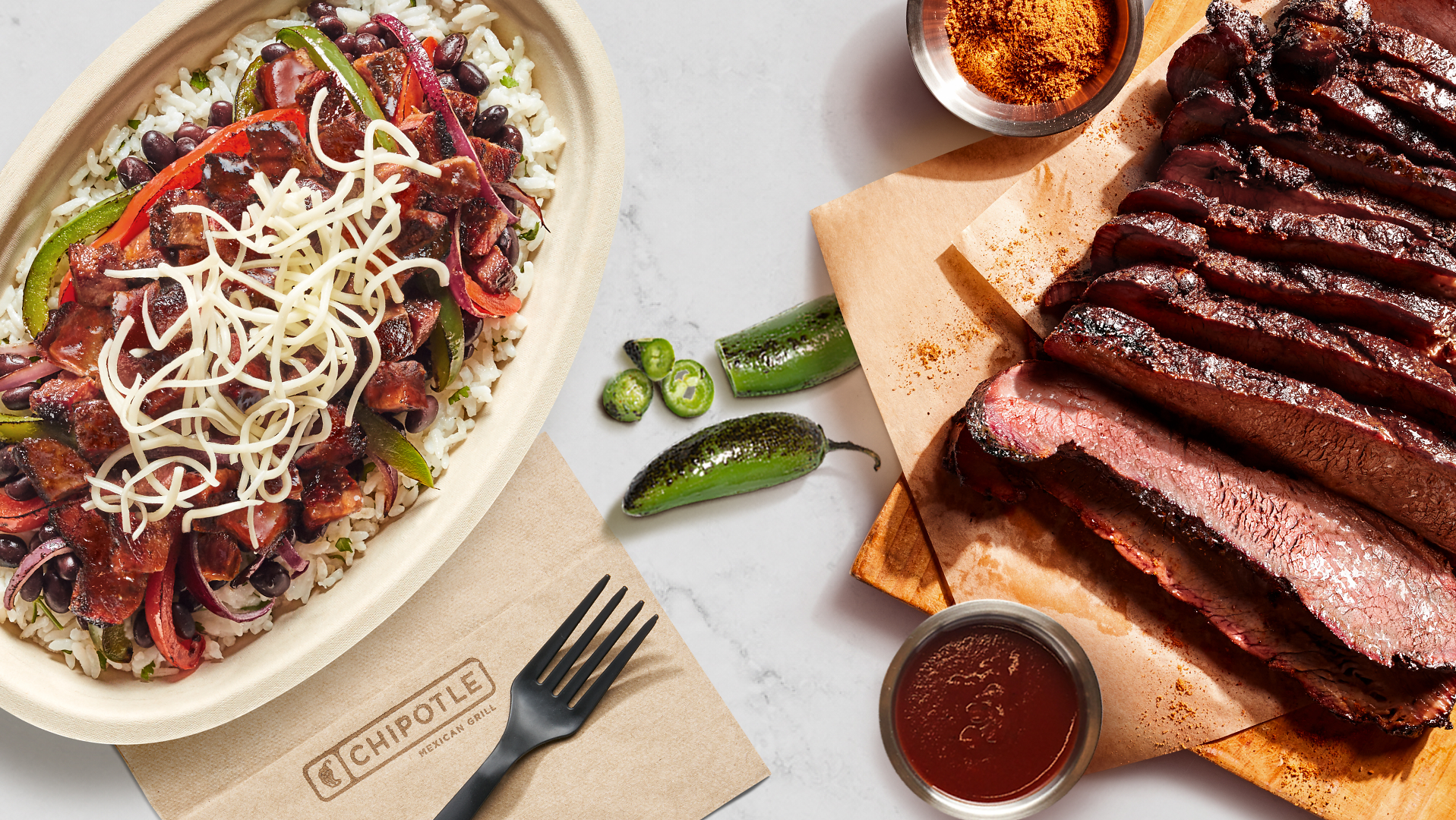
Chipotle Mexican Grill's Smoked Brisket returns to menus across the U.S. and Canada on November 5, renewing scrutiny on the constrained beef supply chain that makes the limited-time protein genuinely scarce — not just in marketing language. The chain estimates that roughly 5% of U.S. beef production meets its Responsibly Raised® standard, a procurement ceiling that has historically pushed the item off menus faster than anticipated.
For ingredient and supply-chain professionals, the relaunch is a useful case study in how operator specifications — no added growth hormones, no routine antibiotics, vegetarian diet, and ranch-level traceability — compress the eligible supplier universe and create real availability constraints at scale. With over 4,200 locations in operation as of mid-2026, sourcing a qualifying brisket cut in sufficient volume to support even a limited-time window is a non-trivial procurement exercise.
Behind the Spec
The brisket arrives at restaurants pre-seasoned with a spice blend anchored by smoked serrano and chipotle chili peppers, then cold-smoked over mesquite wood prior to delivery. In-unit preparation involves a plancha sear, a finishing spice application, and a toss in a smoky chili pepper sauce — all executed in small batches throughout the day. The multi-stage thermal process — low-and-slow smoking followed by high-heat searing — is functionally similar to the cook-then-sear protocols used in sous-vide and combi-oven applications, optimizing both flavor development and texture in a high-throughput foodservice environment.
From a formulation standpoint, the sauce component is where flavor suppliers and clean-label operators will find the most relevant signal. Chipotle's flavor profile here — smoky, savory, tangy, with residual heat from chili peppers — mirrors the smoked-and-fermented flavor vectors gaining traction across plant-based protein and meat-alternative applications, where suppliers are increasingly asked to replicate pit-smoke character without combustion-derived compounds.
Supply Chain Implications
The Responsibly Raised® framework imposes procurement constraints that operators across foodservice are navigating with increasing frequency as sustainability and animal welfare claims migrate from premium-niche to mainstream menu positioning. Cattle raised on a strictly vegetarian diet, without routine antibiotic use, and with ranch-of-origin traceability represent a segment of the beef supply chain that commands meaningful specification premiums and requires deeper supplier relationships than conventional commodity procurement.
Senior Vice President of Culinary Nevielle Panthaky noted that the low-and-slow smoking process is central to the brisket's flavor identity — a technique that, in a supply-chain context, also requires consistency in fat content and moisture retention across cuts to perform predictably at scale. Those parameters translate directly into tighter COA requirements and closer coordination with protein suppliers on specification sheets governing fat cap thickness, moisture content, and post-smoke yield.
For co-manufacturers and contract processors working in the better-beef segment, Chipotle's repeated return to this LTO signals durable operator demand for responsibly sourced whole-muscle cuts — a category where differentiation increasingly lives in the sourcing story as much as the cooking technique. The beef and protein sourcing strategies employed at this scale offer a clear directional signal for ingredient suppliers developing traceable, welfare-certified supply programs.
Chipotle is supporting the relaunch with a $0 delivery fee promotion on Smoked Brisket orders placed through its owned digital channels from November 5 through November 18, a move designed to drive trial volume during the initial availability window before supply constraints tighten. Reporting for Ingredients Press is part of the Food & Beverage Magazine network.
Written by Michael Politz, Author of Guide to Restaurant Success: The Proven Process for Starting Any Restaurant Business From Scratch to Success (ISBN: 978-1-119-66896-1), Founder of Food & Beverage Magazine, the leading online magazine and resource in the industry. Designer of the Bluetooth logo and recognized in Entrepreneur Magazine's "Top 40 Under 40" for founding American Wholesale Floral, Politz is also the Co-founder of the Proof Awards and the CPG Awards and a partner in numerous consumer brands across the food and beverage sector.